


By Daniel Niikoi Ashitey | Accra
There was a time in Ghana when holding a microphone, commanding a stage, or standing before a television camera came with an unwritten covenant with society; a solemn obligation to educate, inspire, correct, and elevate the moral foundation of a young republic. Fame was not merely a privilege, it was a responsibility. Influence was not measured by controversy, but by contribution. Public figures understood that their words carried consequences, and that every performance was an opportunity to strengthen the character of a nation.
Today, that sacred trust appears increasingly fractured.
In its place has emerged a celebrity culture where notoriety often masquerades as influence, where recklessness is rewarded with attention, and where some public figures openly flirt with lawlessness in pursuit of applause, relevance, and social media validation. The growing tendency to glamorize cyber fraud, ridicule law enforcement, challenge state institutions, and present criminal conduct as an acceptable path to success represents more than mere entertainment gone wrong. It signals a disturbing shift in the values we celebrate, the voices we amplify, and the examples we place before our youth.
It is a painful reflection of how far we have drifted from an era when Ghana’s creative arts served as a moral compass rather than a cultural distraction.
To appreciate the depth of what has been lost, we must perform the very act that gave birth to the Sankofa philosophy itself; we must look back in order to move forward.
And when we do, we encounter a generation of artists, dramatists, writers, producers, and performers whose work transformed television screens into classrooms and entertainment into nation building.
At the heart of that golden age stood the legendary television series, Osofo Dadzie.
The Birth of a Cultural Institution
When television drama began to flourish through the Ghana Broadcasting Corporation, it was never conceived merely as a vehicle for amusement. It was designed as an instrument of social education and national development. The goal was simple but profound; to use storytelling as a tool for confronting the social challenges facing Ghanaian communities.
The roots of this movement can be traced to the celebrated S.K. Oppong Drama Group, a travelling concert party ensemble whose performances captured the realities of everyday Ghanaian life with honesty, humor, and cultural authenticity. Their breakthrough came when their acclaimed production, Aku Sika, was televised and embraced by audiences across the country. That success laid the foundation for what would become one of the most influential drama series in Ghana’s history.
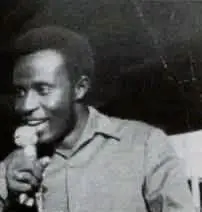
At the center of the phenomenon was the late Frimpong Manso, whose portrayal of the wise and principled pastor, Osofo, made him a household name.
Born in 1939, Frimpong Manso embodied the humility and discipline that defined his generation. He was a devoted family man whose life journey took him from Ghana to the United States, where he worked as a store assistant and security officer before returning home to contribute to the cultural development of his country.
Yet the true significance of Osofo Dadzie extended far beyond the actor who gave life to the character.
The name became a symbol of an entire movement, a collective mission embraced by writers, producers, directors, and performers who believed that drama should not merely reflect society, but improve it.
Drama as a Weapon Against Social Decay
What distinguished Osofo Dadzie from the countless entertainment productions that followed was its uncompromising moral clarity.
Each episode identified a social vice and subjected it to rigorous examination. Corruption, greed, dishonesty, infidelity, envy, betrayal, abuse of power, and moral hypocrisy were exposed without apology. Wrongdoing was never glorified. Criminality was never romanticized. Vice was never repackaged as ambition.
The audience was invited to reflect, question, and ultimately learn.
Perhaps most revolutionary of all was the programme’s defining feature; every episode concluded with a direct moral lesson. The characters left the screen, but the message remained. Viewers were not merely entertained for an hour. They were challenged to confront their own values, attitudes, and conduct.
In that era, drama was not an escape from society.
It was a conversation with society.
It was a mirror held up to the nation.
It was civic education disguised as entertainment.
The Generation That Built Through Storytelling
Frimpong Manso and his contemporaries did not stop with Osofo Dadzie. Their influence extended into other landmark productions, particularly Obra, another iconic drama series that reinforced values of integrity, accountability, family responsibility, and respect for community.
Through these productions, television became a tool for social correction.
Children learned honesty.
Families discussed difficult moral questions.
Communities debated social issues.
Citizens were reminded of their obligations to one another.
The screen served as a classroom, and the actors who appeared on it understood the weight of that responsibility.
Even in his later years, Frimpong Manso never abandoned his cultural mission. He repeatedly warned against the unchecked domination of foreign telenovelas and imported content, arguing that a society that neglects its own stories gradually surrenders its ability to preserve its values, identity, and collective memory.
For him, storytelling was never simply about ratings.
It was about nationhood.
It was about preserving Ghanaian values through Ghanaian voices.
Remarkably, he continued writing scripts well into his later years, driven by the belief that creative expression must ultimately serve the public good.
When he passed away on August 10, 2020, at the age of 81, Ghana lost more than an actor.
It lost one of the custodians of a cultural philosophy that understood the immense power of influence.
Yet his legacy endures.
In Dansoman, his memory remains immortalized through a neighborhood named after the Osofo Dadzie group, a lasting reminder of a period when artists were regarded not merely as entertainers, but as teachers, mentors, and custodians of public morality.
Fame Without Responsibility
The contrast between that generation and much of today’s celebrity culture could not be more striking.
Yesterday’s icons viewed influence as a call to service.
Today’s attention economy often rewards provocation over principle.
Yesterday’s dramatists confronted social ills in order to eradicate them.
Today, some public figures amplify those same ills because controversy generates engagement.
Yesterday’s cultural pioneers promoted respect for law, order, discipline, and civic responsibility.
Today, some self appointed influencers present rebellion, criminality, and public disorder as symbols of courage or success.
The consequence is profound.
When influential voices normalize wrongdoing, vulnerable young people receive the dangerous impression that integrity is optional, that wealth matters more than character, and that accountability is merely an inconvenience.
No nation can sustain its moral foundation when criminality is marketed as ambition and civic duty is treated as a punchline.
Reclaiming the Sacred Stage
The legacy of Osofo Dadzie offers a lesson that Ghana desperately needs today.
Art is never neutral.
Every song, every drama, every social media broadcast, every film, and every public performance is shaping somebody’s worldview.
It is either building society or weakening it.
It is either nurturing responsibility or encouraging recklessness.
It is either strengthening the nation or corroding it from within.
That is why the enduring greatness of the Osofo Dadzie generation lies not in the fame they accumulated, but in the values they transmitted. They understood that influence was not measured by how loudly one could challenge authority, dominate headlines, or trend online.
True influence was measured by how effectively one could guide a nation toward becoming better than it was yesterday.
As Ghana navigates the complexities of the digital age, the question before us is no longer whether we have celebrities.
We certainly do.
The real question is whether those who command public attention understand the responsibility that accompanies it.
The generation of Osofo Dadzie answered that question with wisdom, discipline, and purpose.
Perhaps it is time for today’s cultural icons to do the same.
For a society that ceases to honor virtue will eventually celebrate vice.
And a nation that forgets the teachers who built it may one day find itself taking lessons from those who are tearing it apart.
