
By Daniel Nii Okine
The recent attempt by the Economic and Organized Crime Office (EOCO) to bring the Member of Parliament for Manhyia South, Nana Agyei Baffour Awuah, in for questioning has sparked a debate on the procedures for arresting or inviting an MP.
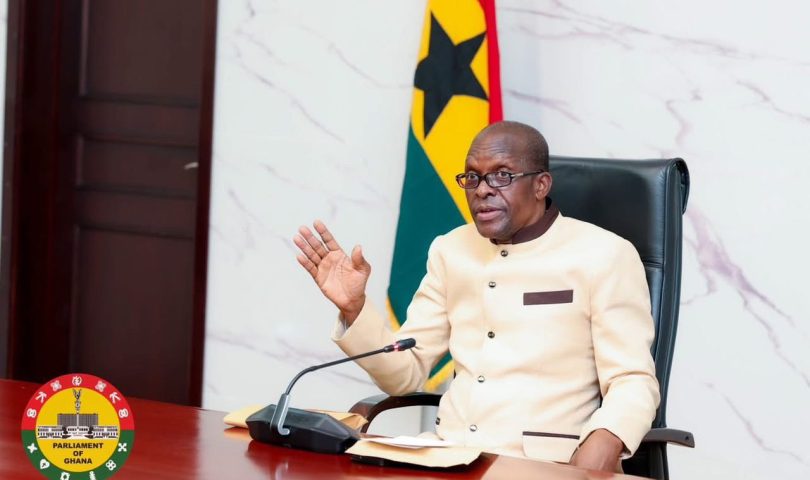
This incident brings to mind the clear stance taken by the Speaker of Parliament, Rt. Hon. Alban Bagbin, regarding the interaction between security agencies and lawmakers published on Ghanaweb on May 22,2026.
To provide clarity on this matter, we are revisiting the Speaker’s explicit pronouncements on the protocols to be followed.
The Speaker’s Stance, Information, Not Permission
In a firm address to Parliament during the Second Meeting of the Second Session, Speaker Alban Bagbin sought to dispel any confusion regarding the arrest or questioning of Members of Parliament.
His message was unequivocal, security agencies do not need his permission to execute their duties involving MPs.
This statement came against the backdrop of the arrest of the Asante Akyem North MP, Ohene Kwame Frimpong, in the Netherlands.
Bagbin clarified that the role of his office is not to grant or deny permission for an arrest.
Instead, the constitutional requirement is for the security agencies to officially inform the Speaker’s office of their intentions.
This notification must include the details of the allegations and the circumstances surrounding the suspicion.
The Speaker emphasized, “It is not for security agencies to seek my permission before arresting or inviting a Member of Parliament for questioning. It is not. Their duty is to inform me and provide the circumstances or allegations that have created the suspicion.”
The Role of Parliamentary Privilege
The Speaker further explained the specific purview of his office in such matters.
Once informed by the security agencies, the Speaker’s responsibility is to determine if parliamentary privilege or immunity applies to the specific situation.
This ensures that while MPs are not above the law, their constitutional protections and ability to perform their duties are not unlawfully hindered.
Bagbin’s clarification underscores a crucial balance.
It affirms the independence and authority of law enforcement agencies to investigate and act upon suspicions of criminal activity, regardless of an individual’s status as a lawmaker.
Simultaneously, it upholds the constitutional safeguards designed to protect Parliament from undue interference.
Moving Forward
The attempted questioning of Nana Agyei Baffour Awuah by EOCO must be viewed through this lens.
The established protocol is clear, security agencies must notify the Speaker, providing the necessary context and allegations.
It is then up to the Speaker to assess the applicability of parliamentary immunity.
As we navigate these issues, it is vital to remember that no one is above the law, but the law also provides specific procedures to maintain the integrity and functionality of our democratic institutions.
The Speaker’s directives serve as a vital guide in ensuring that both justice and parliamentary independence are preserved.