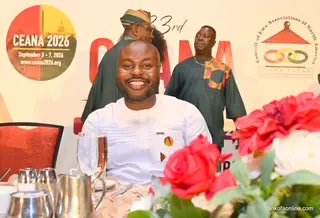

……… Mr. William Kumah had seen such technology in Switzerland,and even in facilities treating cancer in dogs. That contrast is not merely embarrassing, it’s ………
Source: Sankofaonline News Desk | September 7,2026
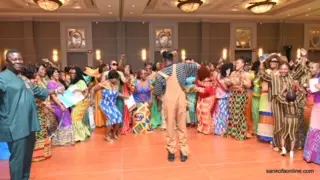
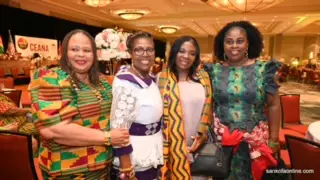
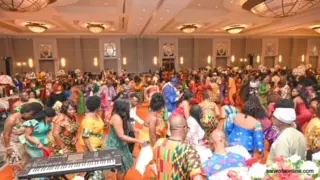
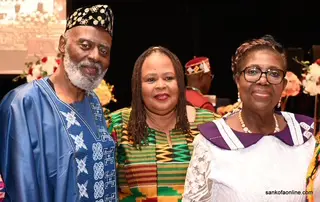
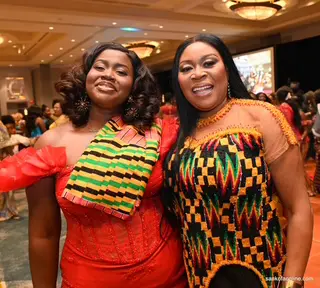
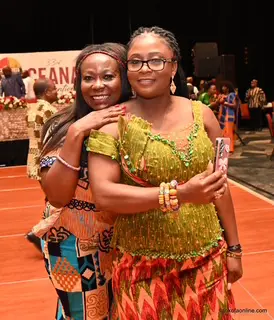
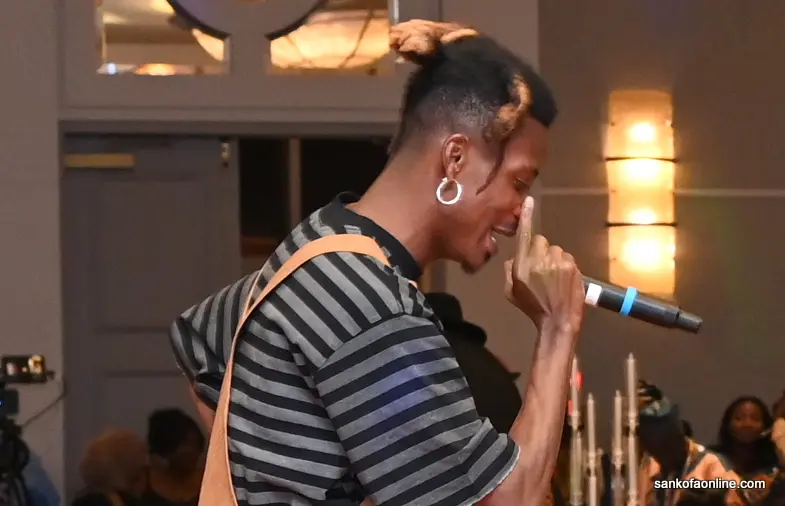
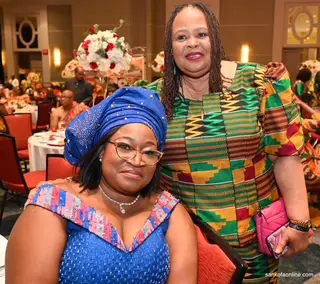
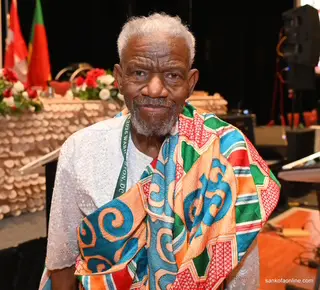
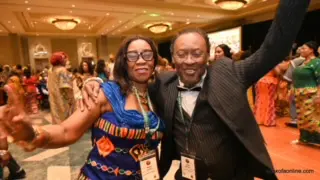
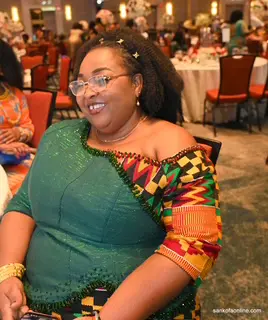
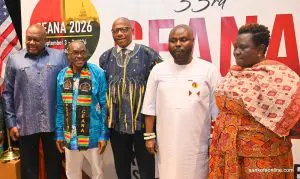
The 2026 CEANA Conference in Maryland became the stage for one of the most uncompromising, truth‑telling diaspora speeches in recent memory. H.E. Gabriel Tanko Kwamigah‑Atokple, Member of the Council of State representing the Volta Region, did not come to offer comfort, praise, or ceremonial niceties. He came to confront a dangerous complacency, both at home and abroad, and to demand a new era of responsibility from a diaspora whose potential far exceeds its current impact.
His message was not wrapped in diplomatic softness. It was sharp, direct, and deliberately unsettling: the Ewe diaspora must stop celebrating its connection to Ghana and start proving its value to Ghana. The time for sentimental attachment has passed. The time for measurable, institutional, and transformative contribution has arrived.
He reminded the audience that CEANA has done well to keep Ewes abroad connected to their roots. But connection alone, he argued, is no longer enough. “The contribution of the diaspora is much larger than the money that is sent home,” he declared, dismantling the narrow narrative that defines diaspora impact through remittances. In that Maryland hall sat doctors, engineers, academics, entrepreneurs, researchers, financial experts, and technology professionals, people embedded in institutions with advanced systems, modern technology, and global networks. Yet Ghana’s institutions, especially in the Volta Region, remain starved of the very expertise that diaspora members use daily in North America.
Kwamigah‑Atokple’s indictment was clear: the diaspora has power it has not yet chosen to use. If a Ghanaian professional abroad has expertise that can strengthen a Ghanaian institution, there must be a pathway for that expertise to flow home. If an investor abroad is searching for credible opportunities, Ghana, and particularly the Volta Region, must be ready with well‑prepared, serious projects. If a university in North America has research strength, UHAS must be positioned for partnership. If an entrepreneur abroad has hard‑won experience, young businesspeople at home must have access to mentorship and scale‑up support. Anything less is a waste of potential.
One example exposed the painful gaps in Ghana’s health system. In a conversation with CEANA President William Edem Kumah, the idea emerged of establishing a cancer and disease research centre at the University of Health and Allied Sciences in Ho. It was not just another project, it was a model for diaspora, led institutional transformation. But then came the revelation: Ghana does not currently have a LINAC machine, a basic tool in modern radiotherapy. Kumah had seen such technology in Switzerland,and even in facilities treating cancer in dogs. That contrast is not merely embarrassing; it is a national failure. It exposes how far behind Ghana is, and how long the country has tolerated mediocrity in healthcare.
Kwamigah‑Atokple refused to let the audience treat cancer as an abstract issue. He insisted that development cannot be reduced to erecting buildings and cutting ribbons. “We cannot build a modern healthcare system simply by constructing more buildings,” he warned. Without trained professionals, modern equipment, research capacity, strong management, and serious partnerships, Ghana is building shells, structures that look impressive in photographs but fail the people they were meant to serve once the cameras are gone.
His critique extended beyond health. He attacked the culture of celebrating the completion of classrooms, clinics, and community projects as if commissioning is the finish line. In reality, that is where the real test begins. Who maintains the facility? Who services the equipment? Who manages the institution and ensures resources keep flowing? If a health facility cannot be maintained or equipment cannot be serviced, “then we have not achieved the development we intended.” It was a direct rebuke to a political and social culture obsessed with optics over outcomes.
For the Volta Region, his message was both hopeful and harsh. He acknowledged the region’s assets,energetic youth, agricultural potential, tourism sites, educational institutions, and emerging opportunities in health and technology. UHAS stands as a foundation for health education and research. But potential is useless without capital, expertise, technology, and markets. The Volta Region must become a serious destination for investors from America, Europe, and Asia,not just for visits, but for establishing productive businesses that create jobs, transfer skills, develop local suppliers, introduce new technology, and open markets for Ghanaian enterprises.
Then he turned his fire on a more sensitive subject: our own divisions. He did not mince words. “There is too much petty and unnecessary rivalry among us including our chiefs, the political class, and we most times allow our differences to become greater than the things that unite us.” This was not diplomatic language; it was a public indictment of traditional and political leadership that has allowed ego and factionalism to sabotage collective progress.
He made unity not a moral plea, but a strategic imperative. The Ewe proverb he invoked,“Eta deka me le na to fe dzo o”,drives home the point: one person alone cannot lift a heavy load. “Mia to wo, to kuku dede ga ade me; mi le novi si.” Our numbers mean nothing if we are pulling in different directions.
The Volta Region cannot demand a stronger place at the national table while its own leaders and elites are busy undermining one another.
In one of the most piercing sections of his address, he reminded the audience that young people in Anloga, Ho, Keta, Kpando, Aflao, Abutia, and across the Volta Region do not need another speech about Ghana’s potential. They need opportunities, jobs, mentorship, access to markets, technology, and institutions that work. Repeating that “Ghana has potential” without creating pathways for youth is not inspiration; it is cruelty.
He then turned the spotlight back on CEANA and the diaspora. The success of the conference, he argued, cannot be measured by the quality of speeches or the size of the crowd. The only meaningful metric is what happens after Maryland:
Which partnership begins?
Which investor is introduced to Ghana?
Which institution forms a collaboration?
Which young entrepreneur receives mentorship?
Which project becomes sustainable?
If the answers to these questions are weak, then the conference is just another social event dressed up as a development forum.
To drive the point deeper, he invoked Professor Kofi Awoonor: “when the final night falls on us as it fell upon our parents, we shall retire to our modest home, secure that we have done our duty by our people; we met the challenge of history and were not afraid.” It was a reminder that history will not judge us by our comfort, but by our courage and our contribution.
Kwamigah‑Atokple’s challenge to the diaspora was personal and direct. When they return to their homes after the conference, they must ask: what can I do for Ghana with what I already have? Not what they might have someday, not what government should do, but what they can deploy now,knowledge, relationships, institutional access, investor contacts, academic links, entrepreneurial experience. “Sometimes it begins with a person deciding to use what they have to help somebody else.” That is development stripped of slogans and reduced to action.
He demolished the excuse of distance. “The distance between Maryland and the Volta Region may be thousands of miles, but that distance does not have to separate us from the development of our homeland. We can live here and still build there. We can succeed here and still create opportunities there. We can use our relationships here to open doors there.” If the diaspora chooses comfort over responsibility, then the problem is not geography, it is will.
In the end, he defined the real mandate before CEANA with ruthless clarity:
Let us strengthen the connection between our people abroad and our institutions at home.
Let us turn professional relationships into partnerships, partnerships into investments, and investments into jobs.
Let us support projects that can survive beyond the people who start them.
Let us build institutions that our children and grandchildren will inherit and be proud of.
And then came the final verdict, one that should haunt every Ghanaian abroad who claims to “love home” but has never translated that love into measurable impact: “Ultimately, our relationship with home should not be measured by how often we travel there or how much we say that we love our people. It should be measured by what our connection produces.”
This was not just a speech. It was a summons. A warning. A line in the sand. Maryland heard it. The diaspora felt it. History will record whether we obeyed it.