
By Daniel Nii Okine
The Government of Ghana’s refusal of MTN Ghana’s proposed GHS20 million humanitarian donation has become one of the most scrutinized developments in the aftermath of the recent xenophobic attacks in South Africa. The official statement issued on 26 August 2026 by the Ministry of Foreign Affairs did more than announce a decline , it opened a window into the state’s crisis‑management philosophy, its diplomatic posture, and the delicate balance between corporate goodwill and sovereign responsibility.
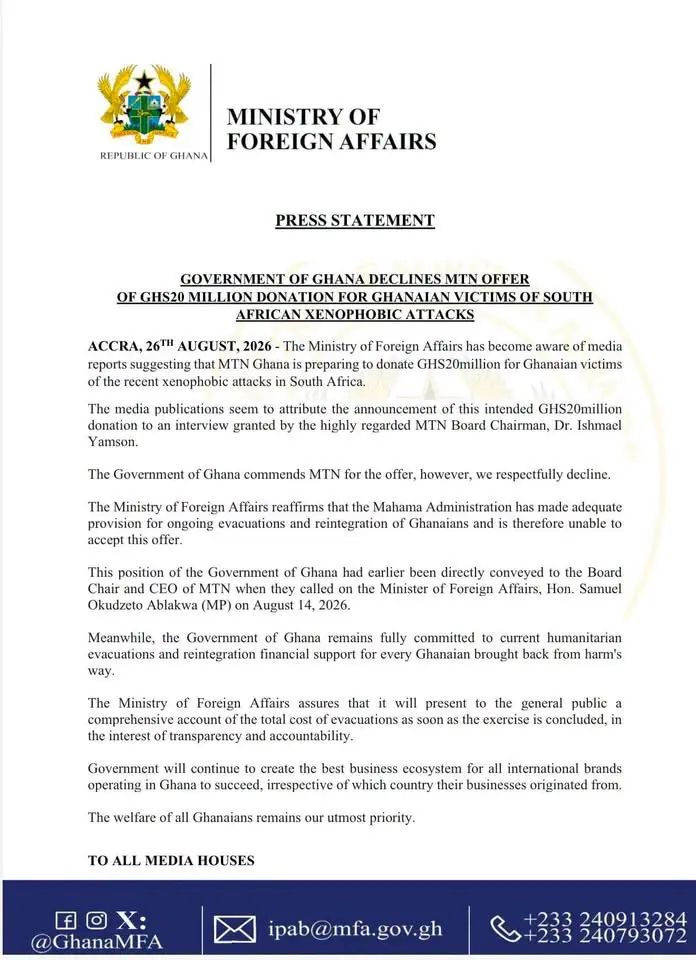
The offer, attributed to comments by MTN Board Chairman Dr. Ishmael Yamson, surfaced at a moment when xenophobic violence in South Africa had once again placed foreign nationals ,including Ghanaians , in harm’s way. MTN, a telecommunications powerhouse with deep South African roots and a commanding presence in Ghana, sought to demonstrate solidarity by pledging substantial financial support. For many observers, the gesture symbolized corporate empathy and an attempt to reinforce MTN’s commitment to Ghanaian welfare during a regional humanitarian emergency.
Yet the government declined. According to the Ministry, the Mahama Administration had already mobilized adequate resources for evacuation, humanitarian assistance, and reintegration of affected citizens. The state emphasized that it was fully prepared to shoulder the financial burden without external intervention. This position, the Ministry noted, had been communicated directly to MTN leadership during a courtesy call on 14 August 2026, well before the donation became a subject of public discussion.
The refusal reflects a broader national doctrine: state‑led humanitarian operations must remain transparent, accountable, and free from external financial influence when public resources suffice. By declining the donation, the government projected confidence in its crisis‑response infrastructure and reinforced the principle that emergencies involving Ghanaian citizens abroad must be handled under clear state oversight. The Ministry further assured the public that a comprehensive account of evacuation expenditures would be published upon completion of the operation, underscoring its commitment to transparency.
At the same time, the government was careful to maintain a balanced tone toward MTN. It reiterated its dedication to fostering a conducive business environment for all international brands operating in Ghana, regardless of their country of origin. This was a strategic signal: while the state declined the donation, it did not wish to appear hostile toward a major corporate actor whose economic footprint in Ghana is significant.
Ultimately, the episode reaffirmed Ghana’s unwavering commitment to the welfare of its citizens. The ongoing evacuations, reintegration programs, and financial support systems reflect a national stance that no Ghanaian will be abandoned in harm’s way, whether at home or abroad.