
Sankofaonline Special Report
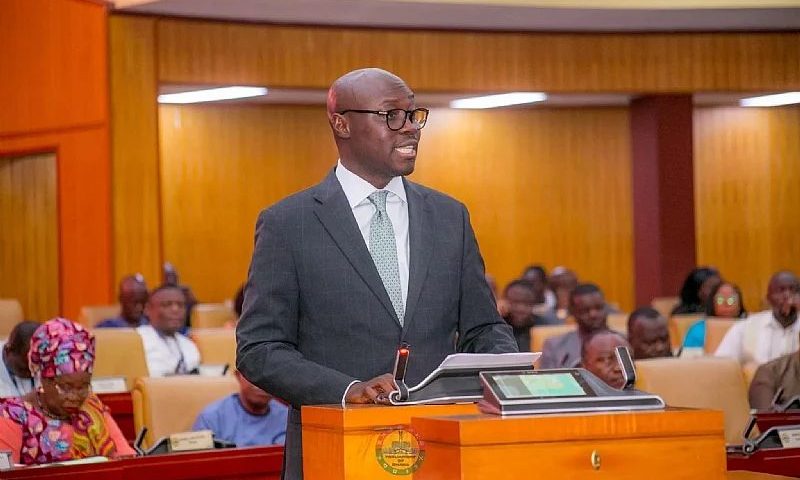
Presenting the 2026 Mid-Year Fiscal Policy Review to Parliament on Thursday, July 23, 2026, Minister for Finance Dr. Cassiel Ato Forson declared that Ghana’s economic recovery is firmly established. Speaking on behalf of President John Dramani Mahama, Dr. Forson emphasized that the country has moved from crisis management to sustained economic stability, driven by strict fiscal discipline, structural tax reforms, and effective foreign exchange management.
The presentation, delivered under the theme “Resetting for Growth, Jobs, and Economic Transformation,” outlined major macroeconomic milestones achieved in 2025 and the first half of 2026. Significantly, the Finance Minister announced that the government is not seeking supplementary appropriations, as spending remains well within the approved 2026 budget framework.
Key Macroeconomic Highlights & Targets
The midpoint performance for 2026 shows key macroeconomic targets being met or exceeded across major benchmarks:
- Economic Growth: Real GDP grew by 6.4% in Q1 2026 (above the full-year target of \ge4.8\%), while non-oil real GDP expanded by 6.3%. This follows a total GDP growth of 6.0% in 2025.
- Inflation Control: Headline inflation dropped dramatically from 23.8% in December 2024 to 5.4% by end-2025, standing at 5.3% as of June 2026.
- Public Debt Reduction: Ghana’s debt-to-GDP ratio fell from 61.8% at end-2024 to 44.7% by end-2025, and held steady at 45.0% through June 2026—hitting statutory PFMA targets ahead of schedule.
- Fiscal Deficit & Surplus: The primary surplus on a commitment basis reached 0.9% of GDP in H1 2026, keeping the nation on course for its 1.5% end-year target. The overall commitment deficit stood at just 0.4% of GDP for H1 2026.
- Gross International Reserves (GIR): Reserves stood at $12.9 billion (5.0 months of import cover) at the end of June 2026, far exceeding the three-month minimum benchmark.
2026 Macroeconomic Framework vs. H1 Performance
| Indicator | 2026 Full-Year Target | H1 2026 Outturn |
| Real GDP Growth | \ge 4.8\% | 6.4% (Q1) |
| Non-Oil Real GDP Growth | \ge 4.9\% | 6.3% (Q1) |
| End-Year Inflation | 8.0\% \pm 2\% | 5.3% (June) |
| Primary Surplus (Commitment) | 1.5\% of GDP | 0.9% of GDP |
| Import Cover (GIR) | \ge 3.0 months | 5.0 months ($12.9B) |
Three Pillars Driving the Transformation
The Minister attributed the rapid turnaround to three Key Transformational Policy Reforms (KTPs) implemented since January 2025:
- Fiscal Correction & Discipline:
- Capped spending, reduced cabinet size to 60 ministers and 23 ministries, and enforced commitment authorization across Ministries and State-Owned Enterprises (SOEs) through the amended Public Procurement Act.
- Debt service as a share of domestic revenue dropped from 55.7% in 2022 to 28.8% in 2025.
- Re-established the Sinking Fund, accumulating GH₵15.6 billion as of July 2022 toward redeeming GH₵30 billion in Domestic Debt Exchange Programme (DDEP) maturities due in February 2027.
- Modernizing the Tax Regime:
- Abolished several levies including the Electronic Transfer Levy (E-Levy), Betting Tax, COVID-19 Health Recovery Levy, and Emissions Levy.
- Deployed AI-driven trade solutions at Customs, boosting monthly customs revenue collections by 15%.
- Increased non-oil tax revenue from 12.6% of GDP in 2024 to 13.1% in 2025 through improved compliance rather than higher tax rates.
- Complementary Fiscal & Monetary Policies:
- Established the Ghana Gold Board (GoldBod) to formalize small-scale mining and streamline gold trades, generating over $15 billion in foreign exchange inflows.
- Reached agreement with large mining companies to purchase 30% of domestic gold production for local refining.
- Supported cedi stability and inflation reduction, with 91-day Treasury Bill yields dropping to 5.73% in June 2026.
Major Policy & Infrastructure Initiatives
The review highlighted key ongoing development initiatives across the country:
- The Big Push Infrastructure Programme: 87 major infrastructure projects have commenced, including the Accra-Kumasi Expressway, for which $1.7 billion has been deposited into a dedicated account at the Bank of Ghana.
- Education & Healthcare: Launch of 210 major educational infrastructure projects (including 10 new secondary schools under a $300 million World Bank-funded project) and rollout of the Free Primary Healthcare Policy.
- 24-Hour Economy: Continued rollout of the Accelerated Export Development Programme and establishment of Farmers’ Service Centres to boost local industry.
- Post IMF-ECF Transition: Ghana is concluding its three-year Extended Credit Facility (ECF) with the IMF and transitioning to a non-financing 36-month Policy Coordination Instrument (PCI) to anchor future structural reforms.
Rebuilding Credit and Market Access
Ghana’s external debt risk was officially reclassified by the World Bank-IMF Debt Sustainability Analysis from UNSUSTAINABLE to SUSTAINABLE WITH ROOM TO ABSORB SHOCKS. Sovereign rating upgrades from Fitch (upgraded to B with a positive outlook), S&P (B- with stable outlook), and Moody’s (Caa1 with positive outlook) reflect growing international confidence in Ghana’s economic direction.
In April 2026, Ghana successfully issued a GH₵2.7 billion 7-year bond—its first long-term cedi-denominated issuance since the 2022 debt restructuring—signaling a return of investor confidence in long-term local currency debt markets.
For complete details on the presentation, readers can access official documentation on the Ministry of Finance website.