
Source : Benison Moses
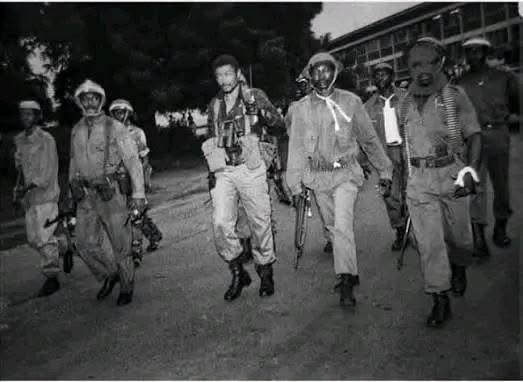
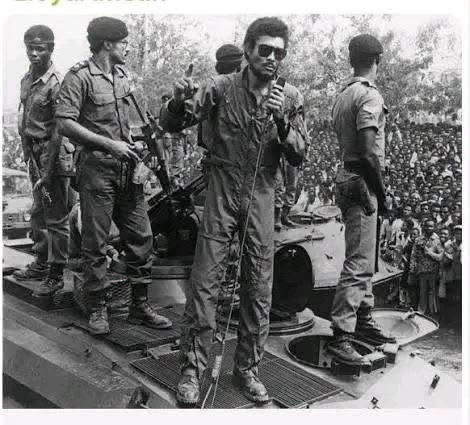
On 19th June 1983, Ghana witnessed one of the most violent and dangerous coup attempts in the country’s history. The target was the government of Flight Lieutenant Jerry John Rawlings and the ruling Provisional National Defence Council (PNDC).
Unlike many previous military uprisings, this was a carefully planned and coordinated operation involving both serving soldiers and military detainees who had been imprisoned after earlier failed coup attempts.
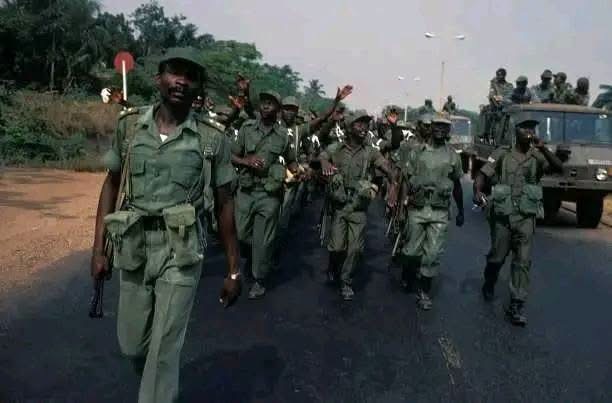
The operation began in the early hours of the morning.
One group of rebels, led by Lance Corporal Halidu Giwa, launched an operation from James Fort Prison in Accra, where several soldiers linked to previous coup attempts were being held.
According to accounts of the events, a pistol had been secretly smuggled into the prison and hidden for use during the operation. Giwa and his men reportedly used the weapon to overpower prison officers on duty and free detained soldiers.
The rebels then moved to various military and security locations within Accra, disarming officers and seizing weapons to strengthen their forces.
Meanwhile, another group led by Tony Tekpor moved towards Nsawam Prison with a clear objective: to free imprisoned soldiers and officers including Major Amedeka, Johnny Dzandu, Alhassan, Abu Baba, Captain Owu and others who had been jailed following previous coup attempts against the PNDC government.
Before heading towards Nsawam, some of the rebels reportedly seized weapons and ammunition from military stores at Burma Camp, loading them into hijacked vehicles for the operation ahead.
The prison break at Nsawam was successful.
The newly freed soldiers quickly joined the rebellion and the enlarged force began moving towards Accra to reinforce their colleagues who were already operating within the capital.
Along the route, the rebels reportedly overpowered security personnel stationed at several checkpoints and roadblocks, capturing weapons and military equipment as they advanced toward the city.
However, one incident would change the course of the entire operation.
At one of the checkpoints, the rebels failed to seize a police communication radio. Before abandoning the position, security officers were able to alert police units in Accra that heavily armed soldiers were advancing towards the capital.
The warning reached Tesano Police, which quickly coordinated with loyalist military forces to establish defensive positions at Apenkwa Junction, one of the most important routes linking Accra to Nsawam and the western parts of the country.
What followed became known as the Battle of Apenkwa.
The area was transformed into a battlefield.
Armoured vehicles were deployed onto the roads while soldiers exchanged heavy gunfire using military rifles, machine guns, rocket-propelled grenades (RPGs), and other heavy weapons.
The fighting was intense and lasted for several hours.
Ordinary civilians travelling to work or going about their daily activities suddenly found themselves trapped in the middle of a military confrontation. Vehicles were abandoned as frightened residents ran for cover while gunfire echoed across Apenkwa, Tesano and nearby communities.
Many people lost their lives during the battle, while others sustained serious injuries.
At the same time, events were unfolding at the Ghana Broadcasting Corporation (GBC).
Halidu Giwa and his men managed to gain access to the national broadcasting station and used the radio to announce the overthrow of the Rawlings government.
The rebels accused the PNDC administration of abandoning the ideals of the revolution and called on Ghanaians and members of the armed forces to support their uprising.
Some accounts have claimed that the ultimate objective of the coup plotters was to remove Rawlings and install economist and former government official Kwame Pianim as Head of State. These claims later formed part of investigations and court proceedings following the failed uprising.
However, government forces responded quickly.
Loyalist troops moved swiftly to regain control of strategic installations including GBC, while fierce fighting continued in various parts of Accra.
Once it became clear that the rebellion had failed, panic spread among the insurgents.
Some fled into nearby bushes and residential areas while others attempted to escape from the capital altogether.
A massive manhunt followed.
Many of the coup plotters were arrested while others were killed during the operation and subsequent security sweeps.
Halidu Giwa initially managed to evade capture but was later arrested after reportedly attempting to re-enter Ghana to continue resistance activities against the PNDC government.
He and several others connected to the uprising were eventually executed.
Years later, hearings before the National Reconciliation Commission (NRC) reopened painful memories of the events of June 1983. Witnesses and former soldiers gave testimonies concerning arrests, executions and allegations of human rights abuses that occurred in the aftermath of the failed coup.
More than four decades later, the Battle of Apenkwa remains one of the darkest and bloodiest chapters in Ghana’s military history.
It serves as a reminder of how close Ghana came to another major political upheaval during the turbulent years of military rule and revolutionary politics.
History reminds us that the peace and stability Ghana enjoys today came at a heavy price paid by generations before us.