Sankofaonline Editorial Desk | July 7, 2026
……..Across the African diaspora , in community associations, hometown unions, cultural organizations, and nonprofit groups , the same corrosive pattern has taken root– Sankofaonline
When people choose wrongdoing, the immediate benefit often blinds them to the collapse of their own judgment. And when leaders abandon restraint, it is never the powerful who pay the price , it is communities, nations, and the very fabric of society that suffers.
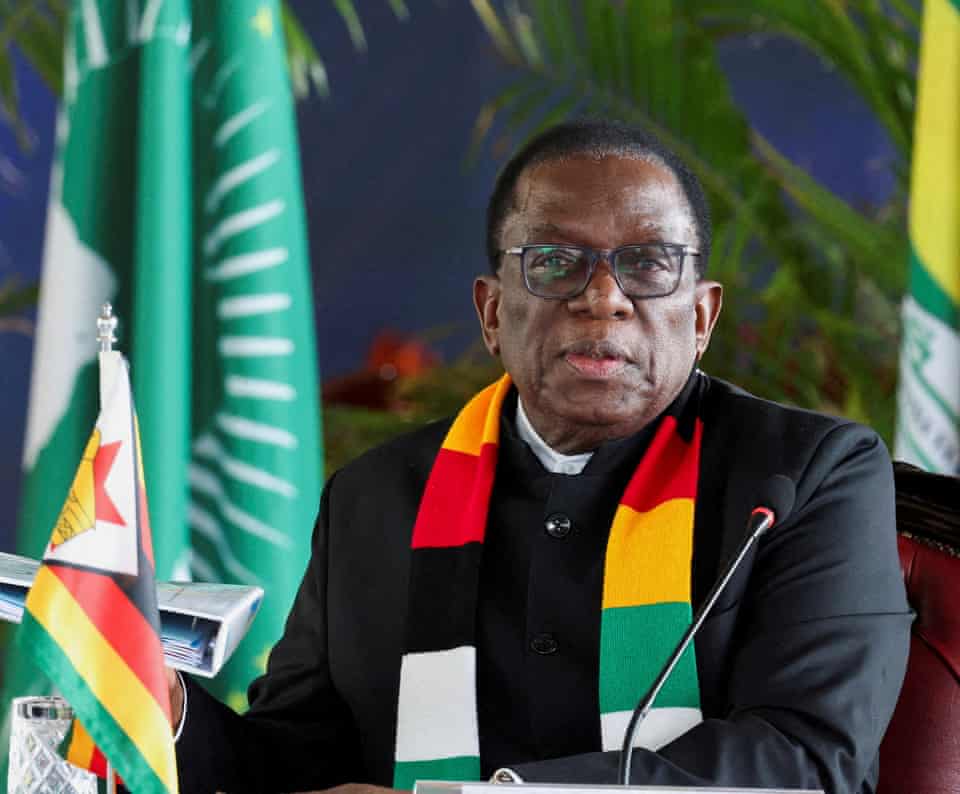
Zimbabwe has now stepped boldly into that dangerous territory.
Zimbabwe’s House of Assembly has passed Constitution Amendment Bill No. 3, a seismic rewrite of the country’s democratic architecture , one of the most consequential since the 2013 constitution was adopted. What is unfolding is not merely a legal maneuver. It is a political earthquake with continental implications.
A Constitutional Rewrite Designed for Power, Not People
The bill contains two provisions that every Zimbabwean and every African who cares about constitutionalism , must understand with absolute clarity.
- Extending Presidential and Parliamentary Terms
The amendment stretches presidential and parliamentary terms from five years to seven. On paper, it looks procedural. In practice, it pushes President Emmerson Mnangagwa’s current and constitutionally final term from 2028 to 2030. A two‑year extension engineered not by voters, but by legislative arithmetic.
- Eliminating Direct Presidential Elections
Under the new system, Zimbabweans would no longer vote directly for their president. Instead, Parliament , at a joint sitting ,would select the head of state after each general election. And because ZANU‑PF holds a supermajority, the ruling party effectively gains the power to choose the president indefinitely.
This is not a reform. It is a recalibration of power away from citizens and toward a political machine that has mastered survival.
Legal Battles and Constitutional Tension
The bill now moves to the Senate, but the fight has already begun. Legal challenges are before the Constitutional Court, with opponents arguing that the amendment violates entrenched provisions specifically designed to prevent leaders from extending their own tenure.
President Mnangagwa has long branded himself a “constitutionalist.” Yet the constitution ,and its spirit , stand in stark disagreement with the direction he is steering the nation.
Zimbabwe’s constitutional framers anticipated this moment. They built safeguards. Those safeguards are now being tested.
Africa Has Seen This Movie Before
The continent knows this script.
The actors change.
The tactics evolve.
The ending rarely does.
Across Africa, constitutional amendments have too often become tools for incumbents to stretch their stay, weaken electoral accountability, and consolidate power under the guise of stability. Each time, democracy loses a limb. Each time, citizens lose a voice.
Zimbabwe’s current trajectory is not an isolated event , it is part of a broader continental pattern where constitutional manipulation masquerades as governance.
The Diaspora Mirror: Associations and Organizations Are Not Immune
What is happening in Zimbabwe is not confined to state politics. Across the African diaspora , in community associations, hometown unions, cultural organizations, and nonprofit groups , the same corrosive pattern has taken root.
Leaders manipulate constitutions to stay in power. Others simply ignore the constitution altogether.
Some scheme behind closed doors, influencing a handful of members to block elections from ever taking place.
In other cases, leaders disregard constitutional procedures and elevate friends or loyalists, creating inner circles that benefit financially while the broader membership is sidelined.
These organizations were created to serve communities, preserve culture, support development, and build unity. Yet too often, they become personal fiefdoms where accountability is treated as an inconvenience and transparency as a threat.
The diaspora’s struggle with constitutional integrity mirrors the continent’s struggle. When leaders twist rules for personal gain, whether in Harare or Chicago, the community suffers. Trust erodes. Participation declines. And the very purpose of the organization is compromised.
Why Zimbabwe’s Moment Matters for Africa
Zimbabwe is not just rewriting its constitution. It is rewriting the expectations of democratic participation. If direct presidential elections can be scrapped in one nation without consequence, it sets a precedent others may follow.
This moment matters because:
- It tests the strength of constitutional courts across Africa.
- It challenges the resilience of civil society and regional institutions.
- It raises questions about the future of electoral legitimacy on the continent.
- It forces Africans to confront whether democracy is a principle or a convenience.
- It reflects a broader culture of constitutional manipulation seen even in diaspora associations.
When leaders manipulate constitutions, they are not merely adjusting laws , they are adjusting the destiny of millions.
The Human Cost of Political Engineering
When wrongdoing becomes normalized, the immediate beneficiaries celebrate. But the long‑term cost is borne by ordinary people:
- Communities lose trust in institutions.
- Youth lose faith in elections.
- Investors lose confidence in stability.
- Society loses its moral compass.
- Diaspora organizations lose credibility and relevance.
Zimbabwe’s constitutional crisis is not just a political story. It is a social story. A human story. A cautionary tale.
A Call for Continental and Diaspora Vigilance
Africa cannot afford to sleepwalk through this moment. Zimbabwe’s constitutional amendment is a mirror reflecting a larger continental struggle: the battle between democratic aspiration and authoritarian drift.
The diaspora cannot afford complacency either. Associations must defend their constitutions, enforce term limits, conduct elections, and reject the quiet normalization of power hoarding.
The world is watching.
Africa is watching.
The diaspora is watching.
Zimbabwe’s citizens , whose voices risk being muted, are watching most of all.