
Sankofaonline Special Report | June 19, 2026
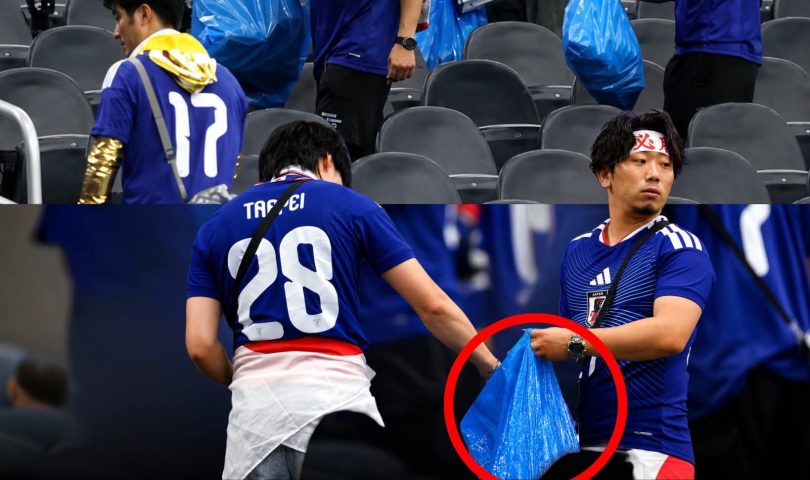
Dallas Texas : On June 14, 2026, Dallas Stadium bore witness to a thrilling 2–2 draw between Japan and the Netherlands. But the real masterclass didn’t happen on the pitch. It occurred in the stands after the final whistle blew. Instead of rushing for the exits, hundreds of Japanese football fans stayed behind.
Armed with the very same blue plastic bags they used to cheer on their team, they meticulously picked up plastic bottles, wrappers, and discarded cups from the rows of seats. Even NFL star Jameis Winston, moved by the sight, donned a Japan jersey and joined the cleanup effort.
This is not a one-time stunt; it is a global tradition dating back to Japan’s first World Cup appearance in 1998. It is an expression of souji, a cultural philosophy rooted in the simple belief that you must leave any space you occupy better and cleaner than you found it.
As I read about this inspiring display, my heart sank heavy with the stark and painful contrast to the reality we live every day in Ghana.
Walk through the streets of Accra, Kumasi, or any major Ghanaian township, and you are confronted with a visual crisis. We have turned our nation into an open-air dump. We consume a sachet of water and drop the plastic heedlessly onto the pavement. We finish a meal and toss the styrofoam container out of a moving trotro window. Our landscape is choked with filth, our markets are engulfed in refuse, and our pristine beaches have been choked under layers of discarded textiles and plastics.
Where the Japanese see a public space as a shared sanctuary requiring collective respect, we treat our public spaces as no-man’s-lands where personal responsibility goes to die.The consequences of our collective indiscipline are not merely aesthetic; they are fatal. When it rains, the tragedy of our behavior unfolds with predictable, devastating regularity. The trash we casually throw onto the streets ends up in our drainage systems. Our gutters are perpetually choked with solid waste, completely paralyzed and unable to channel water. The result? Catastrophic urban flooding that destroys businesses, displaces families, and claims innocent lives year after year.
Worse still are the silent killers that thrive in the filth we create. The standing water in our clogged gutters becomes a massive breeding ground for Anopheles mosquitoes, driving our endless battle with malaria. The contamination of our water tables and food supplies by exposed refuse triggers frequent, preventable outbreaks of deadly diseases:
- Cholera: A perennial scourge that thrives in unhygienic environments.
- Typhoid Fever: Spread through food and water contaminated with fecal matter and filth.
- Dysentery and Chronic Diarrheal Diseases: Which continue to claim the lives of our most vulnerable population,our children.
We often look at Japan and marvel at their technological advancements, their economic power, and their bullet trains. But the foundation of their success isn’t just engineering; it is discipline. Cleanliness in Japan is not an innate genetic trait; it is a learned behavior.In Japanese schools, there are no janitors hired to clean up after children. Instead, the students themselves participate in daily cleaning rituals. They scrub the floors, wipe down the desks, and clean the shared restrooms. From the age of five, a Japanese child learns a fundamental truth: if you make a mess, you clean it up. If you use a space, you respect it. By the time they grow into adulthood and travel across the world to a stadium in Dallas, keeping their environment pristine is as natural as breathing.
If cleanliness can be taught, then Ghana must start teaching it immediately. We cannot afford to wait for the current generation of adults to magically unlearn decades of bad habits. We must strike at the root. We must bring souji into the Ghanaian classroom.
Imagine a Ghana where our educational curriculum mandates that students dedicate the final fifteen minutes of every school day to cleaning their classrooms, compound, and surrounding gutters. Imagine a system where keeping the school environment spotless is tied to leadership honors and character assessments, rather than being used as a retroactive, resented punishment for bad behavior.
If we teach our children to take pride in the cleanliness of their schools, they will grow into citizens who take pride in the cleanliness of their cities.
National transformation does not begin with multi-million-dollar government sanitation contracts that treat the symptoms rather than the cause. It begins with a psychological shift. It begins when the sight of trash on the ground causes us the same discomfort that a stain on our finest clothes would.
The Japanese national team famously leaves their locker room spotless after every match, leaving behind folded origami cranes and a handwritten note of thanks. They understand that their behavior reflects the soul of their nation.
It is time to ask ourselves: what does the state of our streets say about the soul of Ghana? The fans in Dallas have shown us that true patriotism isn’t just about singing an anthem or waving a flag. It is found in the simple, quiet dignity of picking up your own plastic bag. Let us look in the mirror, learn the lesson, and finally teach our children to build the clean, healthy, and disciplined Ghana we all deserve.