

Special Sankofaonline Coverage | Contributing – Efo Kofi Gbeklui
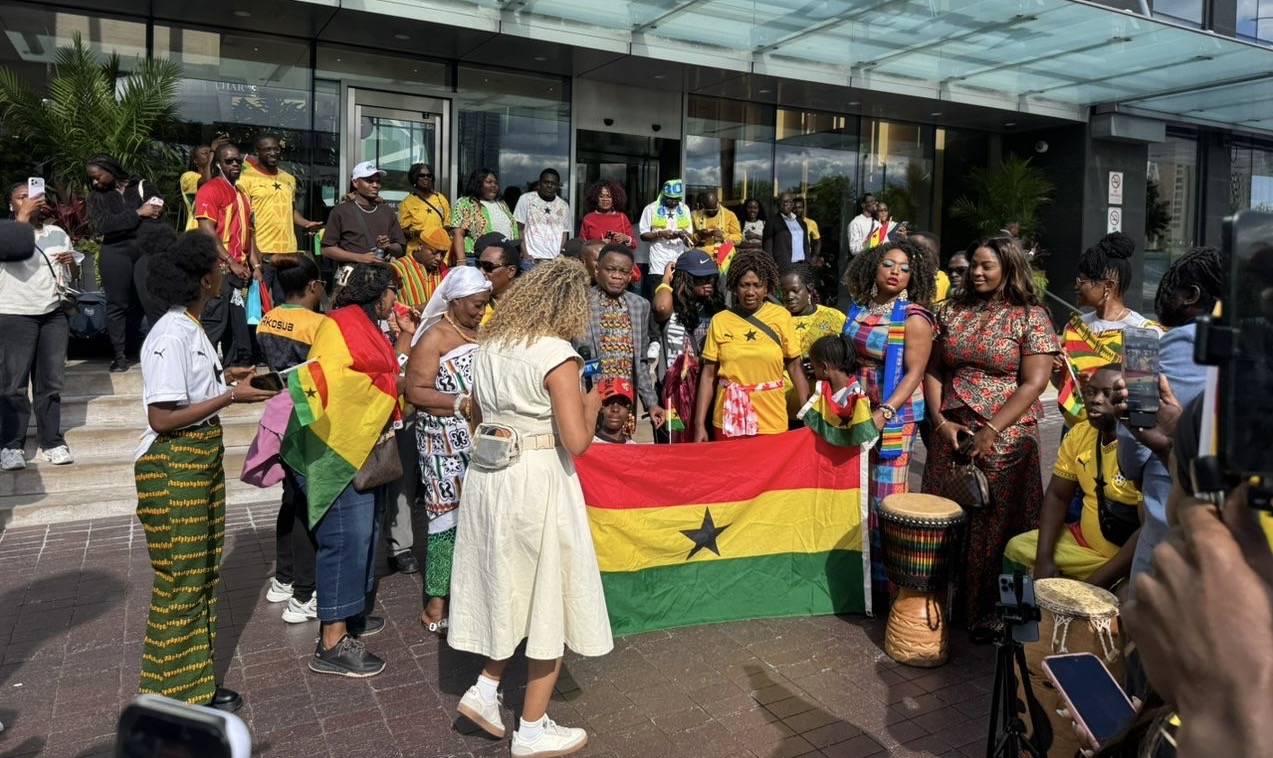
The heart of downtown Toronto did not merely celebrate a soccer victory; it witnessed a cultural homecoming of historic proportions. Following Ghana’s dramatic 95th‑minute 1–0 triumph over Panama in their opening match of the 2026 FIFA World Cup. The renamed Sankofa Square (formerly Yonge–Dundas Square) erupted into a living tapestry of red, gold, green, and the iconic black star. The granite plaza at Yonge and Dundas became an ecstatic epicenter of West African pride, rhythm, and identity.
It was a gathering unlike anything the square had ever seen, an unprecedented convergence of diaspora energy, national pride, and cultural memory. What unfolded was not simply a celebration; it was a reclamation of space, sound, and spirit.
THE SOUNDS OF THE JAMA
For those unfamiliar, Jama is not mere cheering. It is a rhythmic, communal, call‑and‑response tradition,part folk music, part spiritual release, and the heartbeat of Ghanaian sports culture. When Caleb Yirenkyi slotted home the stoppage‑time winner at Toronto Stadium, a shockwave of emotion surged through the city. Within minutes, ordinary chants dissolved into full‑throated Jama anthems.
Djembe drums appeared as if summoned by ancestral memory. Bells, shakers, and improvised percussion cut through the warm night air. Live performers joined the swelling crowd, while DJs blended Afrobeats, highlife, and stadium anthems into a pulsating soundtrack. Hundreds, then thousands, clapped in syncopated rhythm as the square’s fountains shot water skyward, illuminated by neon light. Overhead, the massive digital billboards,normally reserved for corporate ads,reflected a mosaic of jubilant faces, swirling flags, and fans draped in Black Stars jerseys.
THE SPIRIT OF SANKOFA: A BEAUTIFUL SYNCHRONICITY
What made the night feel almost mythic was the setting itself. Only recently had the city renamed this iconic public space, shedding the colonial legacy of Henry Dundas and adopting a name rooted in Ghanaian heritage: Sankofa.
Sankofa, from the Twi language of the Akan people of Ghana, means “go back and retrieve it.” Symbolized by a bird reaching backward to grasp an egg, it teaches that wisdom from the past must guide the future.
The symbolism was impossible to ignore. On a square christened with a sacred Ghanaian concept, the Ghanaian national team delivered a victory that ignited the greatest celebration the space had ever hosted. For the Ghanaian‑Canadian diaspora and thousands of traveling supporters, singing ancestral Jama songs on a plaza named Sankofa felt like destiny fulfilled, a literal embodiment of reaching back to one’s roots and carrying them proudly into the future of Canadian urban culture.
ACCRA‑ON‑THE‑LAKE
As the night deepened, the line between Toronto and Accra blurred. Street vendors selling jollof rice, kelewele, and meat pies saw queues stretching down Victoria Street. Dance circles formed and re‑formed as strangers, longtime Torontonians, visiting fans, and Ghanaian expatriates,embraced in spontaneous celebration.
The square, designed as a public stage, achieved its highest calling. It became a theater of unity, memory, and unfiltered joy.
Ghana did not merely secure three points. In the heart of Toronto, at a square bearing a name from their own soil, the Black Stars and their vast army of supporters permanently rewrote the cultural soundscape of the city.