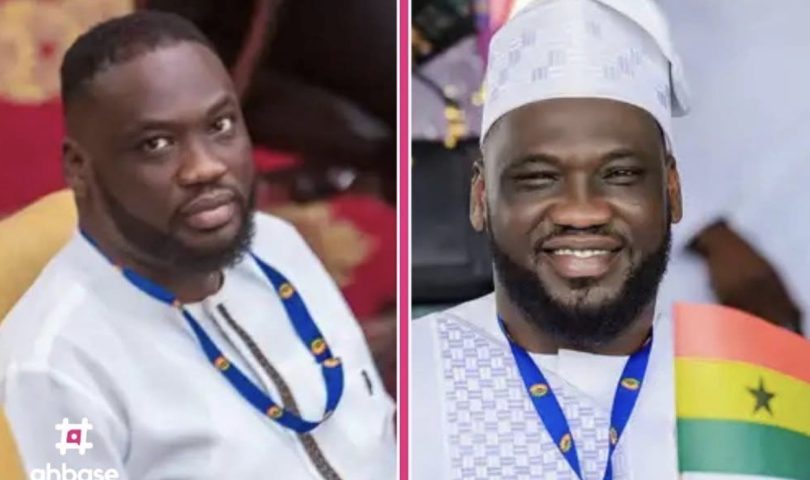

Op‑ed By Daniel Nii Okine
The fate of Asante Akyem North Member of Parliament (MP), Andy Appiah-Kubi Ohene Frimpong, remains suspended in legal limbo within the Dutch judicial system. Following his high-profile detention in Amsterdam, the lawmaker’s legal team has officially fired its first major counter-shot: a formal application for bail.
Confirming the development on JoyNews, South Dayi MP Rockson-Nelson Dafeamekpor revealed that the paperwork has been successfully filed, with the defense praying for a court hearing within the week.
While the Ghanaian state has deployed a powerhouse of diplomatic and institutional machinery—mobilizing Parliament, the Foreign Affairs Ministry, and the Ghanaian Embassy in The Hague—a sobering reality remains. In the Netherlands, diplomatic prestige does not equal a get-out-of-jail-free card.
The Diplomatic Surge: Ghana’s Full-Court Press
Accused or detained citizens abroad usually rely on standard consular visits. However, when a sitting Member of Parliament is intercepted by foreign authorities, the state apparatus moves fast. According to Dafeamekpor, Ghana is executing a coordinated two-pronged strategy:
- Parliamentary Backing: Leadership has extended maximum institutional solidarity to ensure their colleague is not abandoned in a foreign cell.
- Diplomatic Intervention: Foreign Affairs Minister Shirley Ayorkor Botchwey has directly coordinated with Ghana’s Ambassador to the Netherlands to guarantee the MP receives full diplomatic courtesies and high-caliber legal representation.
“The Foreign Minister has coordinated with our ambassador to offer him every assistance and courtesy available so that he can competently defend himself.”
— Rockson-Nelson Dafeamekpor, MPLegal Analysis: The Steep Climb for Bail in the Netherlands
While optimism runs high in Accra, the legal reality in Amsterdam is fiercely rigid. Dutch criminal procedure operates under civil law traditions that view detention and bail entirely differently than Anglo-American or Ghanaian common law systems.
To analyze Ohene Frimpong’s chances of success, we must look at how Dutch courts evaluate pre-trial detention (voorlopige hechtenis) and the high threshold required to secure a release.1. The Absence of a “Cash Bail” System
Unlike in Ghana or the United States, where a suspect can often secure freedom by posting a sum of money or land titles, the Netherlands rarely uses financial bail. Instead, the court looks at conditional release. The judge will care less about how much money Ohene Frimpong has, and more about whether conditions can mitigate specific judicial risks.
2. The Three Hurdles the Defense Must Clear
To grant bail, a Dutch examining judge (rechter-commissaris) must be convinced that the standard grounds for detention no longer apply. The defense faces three major legal obstacles:
Legal Risk Factor The Prosecutor’s Argument The Defense’s Counter-Strategy Flight Risk (Vluchtgevaar) The suspect is a foreign national with no permanent residency, employment, or deep-rooted social ties in the Netherlands. He has a passport and the means to flee. The defense must argue his status as a high-ranking public official ensures he will return to clear his name, potentially offering to surrender his diplomatic passport. Collusion / Investigation Risk Releasing the suspect could allow him to tamper with evidence, contact witnesses, or coordinate stories with potential co-conspirators. Argue that the initial evidentiary phase is complete and that the MP cannot alter digital or physical evidence currently held by Dutch police. Re-offending Risk There is a risk the suspect will commit similar offenses if released. Demonstrate a clean global record and argue that under intense international scrutiny, re-offending is impossible. 3. The Double-Edged Sword of Parliamentary Status
Does being an MP help or hurt? In the court of public opinion, it commands respect. In a Dutch courtroom, it is a double-edged sword:
- The Pro: It proves he has a definitive place of prominence to return to, making him an unlikely candidate to go “underground” as a fugitive in Europe.
- The Con: Dutch prosecutors are fiercely independent and notoriously impervious to political pressure. Any perception that the Ghanaian state is trying to “muscle” a release can backfire, prompting the judge to double down on the principle that everyone is equal before Dutch law.
What Lies Ahead This Week?
The coming days are critical. The defense’s immediate goal is to secure a suspension of the detention under strict conditions. These conditions will likely include:
- Surrendering all travel documents.
- Mandatory reporting to a local Amsterdam police station at designated intervals.
- Remaining at a fixed, approved address in the Netherlands (potentially a residence secured by the Ghanaian Embassy).
If the Dutch judge believes that the diplomatic oversight provided by the Ghanaian Embassy guarantees Ohene Frimpong’s appearance at trial, bail could be granted. However, if the underlying charges involve severe cross-border offenses, the court may choose to keep the lawmaker behind bars to protect the integrity of the European Union’s borders and legal system.
Ghana watches, Amsterdam deliberates, and for Ohene Frimpong, the clock is ticking loudly in a foreign cell.