
Sankofaonline.com News Desk | By Fuvi Kloku
Chicago State University did not simply host an induction ceremony on May 12, 2026, it delivered a challenge to a healthcare system that has grown far too comfortable with its own inequities. Inside the Emil and Patricia E. Jones Convocation Center, sixty‑four graduates crossed a threshold that demanded more than applause. It demanded accountability. Under the direction of Mistress of Ceremony Dr. Charita Barlow‑Walls, Interim Associate Dean of the School of Nursing, the message was unmistakable: the nation does not need more employees; it needs healers, advocates, and defenders of human dignity.
The Class of 2026 represents the full force of CSU’s College of Health Sciences and Pharmacy: Bachelor of Science in Nursing, Bachelor of Science in Health Information Administration, Master of Science in Occupational Therapy, Bachelor of Science in Pre‑Occupational Therapy, Master of Public Health, Bachelor of Science in Public Health, and the Doctor of Pharmacy. These are the professions that determine whether communities thrive or suffer , and CSU made it clear that these graduates are stepping into a world that will test their ethics as much as their expertise.
Before the Nightingale Pledge was recited, the head of faculty delivered a rapid‑fire charge that cut through the ceremony’s politeness and went straight to the conscience of every inductee. They were commanded to carry the Five Seeds of Nursing, not as decorative virtues but as the bare minimum required to serve a public that entrusts its life to them:
- Compassion — Truly seeing patients as human beings and grounding every interaction in empathy.
- Competency — The fusion of art and science; the clinical skill that gives compassion its power.
- Confidence — Trusting one’s ability to learn, lead, and act with purpose, even under pressure.
- Conscience — The moral compass that guides ethical decisions when no one is watching.
- Commitment — Lifelong dedication to resilience, self‑care, and continuous professional growth.
“Compassion is the foundation of nursing, truly seeing your patients as human beings,” one faculty member declared. Another delivered the line that will follow this class for years: “Wear your pants with confidence.” Translation: if you cannot stand firm in your purpose, you have no business standing at a patient’s bedside.
The Interim Dean widened the indictment. Healthcare is evolving, yes, but not always in ways that serve the vulnerable. Technology and artificial intelligence accelerate, yet disparities deepen. Mental‑health crises rise. Public trust erodes. And too many institutions respond with press releases instead of reform. The Dean reminded the inductees that their professions, nursing, pharmacy, occupational therapy, public health, and health information administration, are not mere career paths. They are moral commitments rooted in service, ethics, leadership, and human dignity. “Working in health‑related disciplines… it is a calling,” the Dean said. A calling that demands resilience, sacrifice, and the courage to confront systems that often fail the very people they claim to protect.
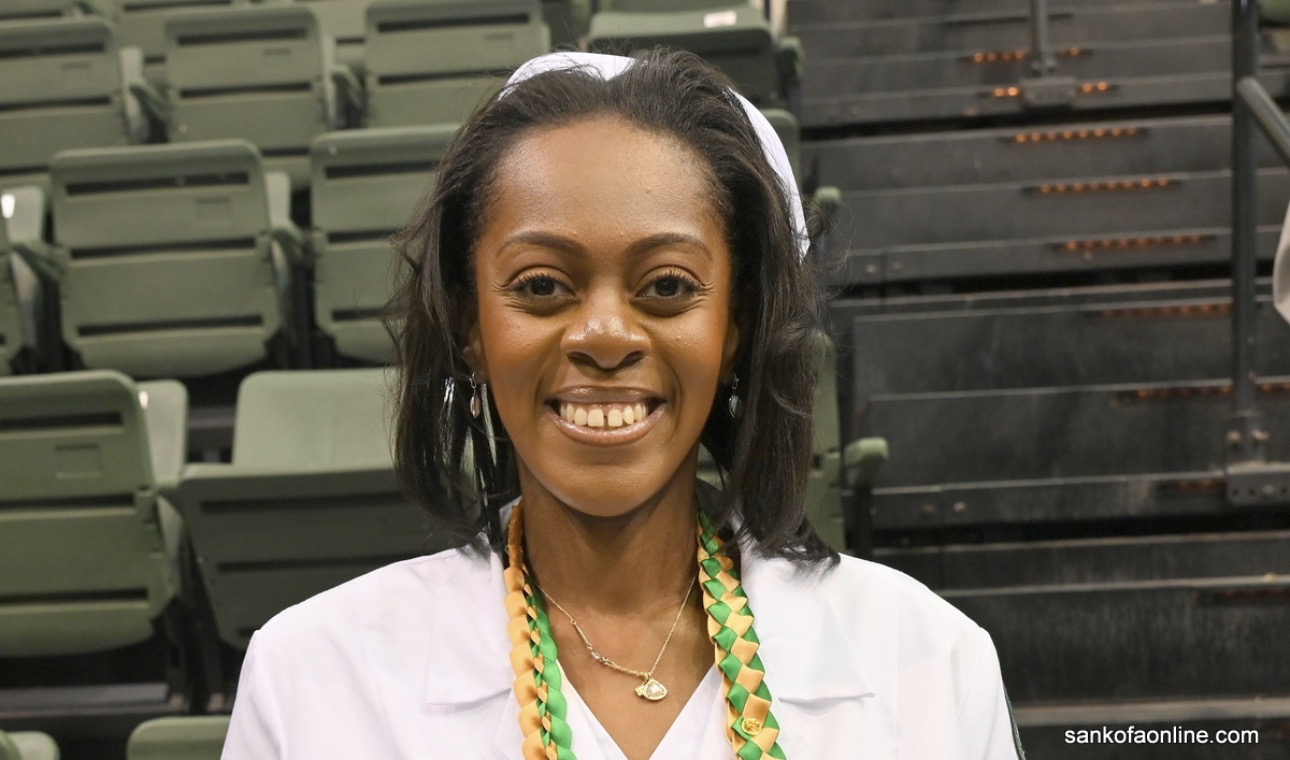
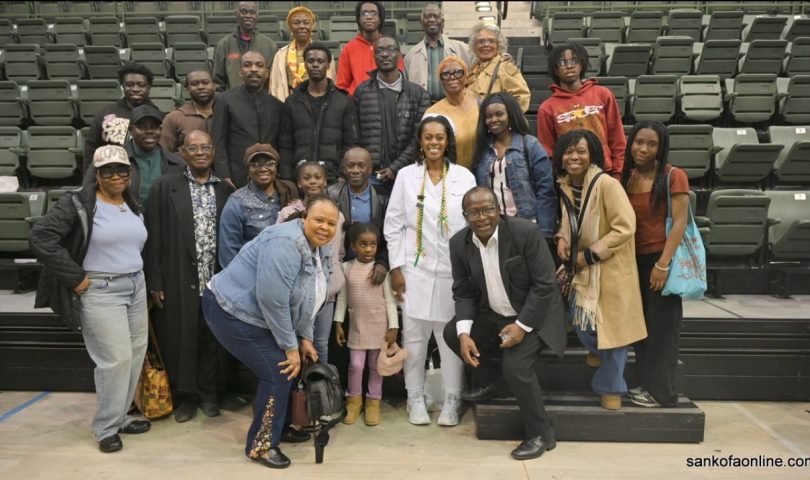
The most powerful moment of the night came from the community itself. Members of the Ghanaian Community Church filled the arena in proud support of Miss Adjoa Aboagyewaa Amponsah, demonstrating what institutional leaders often forget: representation is not symbolic, it is strategic.
Research shows that culturally responsive and culturally concordant care does more than improve communication and strengthen trust , it saves lives, a truth demonstrated at the Ghanaian Community Clinic here.
Another speaker boldly declared, “Representation in health care truly saves lives,” it was not rhetoric. It was a data‑driven indictment of a system that still struggles to reflect the communities it serves.
Many of the graduates reached this milestone while juggling jobs, caregiving responsibilities, financial strain, and moments of deep self‑doubt. Yet they arrived, steadfast, prepared, and transformed. They are no longer students. They are the South Side of Chicago’s newest healers, advocates, and defenders of dignity. They are stepping into a healthcare landscape that will test their ethics, their stamina, and their humanity. And they must be ready to push back against inequity, against indifference, against the quiet normalization of suffering.
Chicago State University’s mission, excellence, equity, community, and justice, is now theirs to carry. The Class of 2026 enters the world at a time when the nation desperately needs professionals who can heal not only bodies, but broken systems. Their induction was not a celebration of arrival. It was a summons to action.
If the healthcare establishment is not ready for the standard they intend to set, that is not the graduates’ problem. It is the system’s warning.