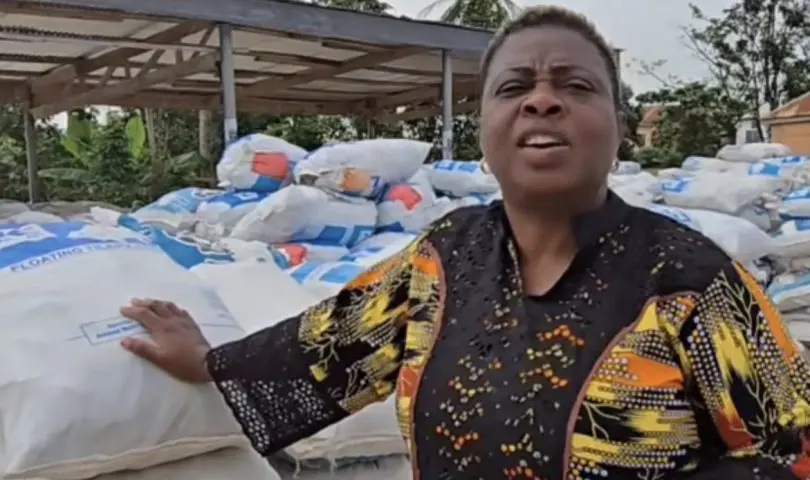

The growing attention to Anfoega’s white clay (kaolin) highlights a familiar pattern in resource economies: exporting raw materials while importing finished goods at a premium. This concern is valid, but the issue is more complex than simply “foreign companies exploiting local resources.”
Global Value Chain Reality (Why Raw Export Happens)
China’s dominance in kaolin processing is not accidental. It is built on:
Decades of industrial clustering (ceramics, pharmaceuticals, paper industries)
Advanced refining technology (calcination, micronization, beneficiation)
Reliable energy and logistics systems
Massive economies of scale
Ghana currently lacks much of this ecosystem, which makes raw export economically rational in the short term.
So the issue is not just “stop exporting raw clay,” but: Can Ghana competitively process it at scale?
Infrastructure & Cost Constraints
For local processing to work, several macro constraints must be addressed:
Energy cost and reliability
Kaolin processing is energy-intensive. Ghana’s relatively high industrial power costs reduce competitiveness.
Transport and logistics
Moving raw clay from Anfoega to processing hubs and ports adds cost due to road and rail limitations.
Water and environmental management
Processing requires water treatment systems and environmental compliance frameworks.
Without solving these, local factories risk becoming uncompetitive or unsustainable.
Market Demand & Industrial Linkages
Kaolin is not valuable just because it exists—it becomes valuable when tied to downstream industries:
Key demand sectors:
Ceramics and tiles
Paints and coatings
Pharmaceuticals
Paper and packaging
Cosmetics
Ghana must ask:
Do we have domestic industries to absorb processed kaolin?
If not, production must target export markets, which introduces:
Quality standards (ISO, pharmaceutical-grade)
Global competition (China, Brazil, US)
Investment & Financing Reality
Building a viable kaolin processing industry requires:
Significant capital investment (processing plants, labs, machinery)
Technical expertise and technology transfer
Long-term patient capital
This is why foreign firms participate—they bring:
Technology
Market access
Financing
The goal should not be to exclude foreign players, but to: structure partnerships that retain value locally.
Policy & Governance Imperatives
To avoid repeating past resource mistakes, Ghana needs:
Clear mineral policy for industrial minerals (not just gold/oil)
Export controls or incentives (not outright bans)
Local content requirements
Industrial parks near resource zones (e.g., Volta Region)
Tax incentives for value-added processing
Crucially:
Poorly designed restrictions can discourage investment and push activity into informal or illegal channels.
Employment & Economic Impact
If properly developed, the kaolin value chain can:
Create direct industrial jobs
Support SMEs (transport, packaging, services)
Boost regional development (Volta Region)
But job creation depends on:
Scale + competitiveness, not just ownership.
Strategic Way Forward (Balanced Approach)
Instead of a hard “stop exports” stance, a more effective strategy is:
Phase-based industrialization
Short term: controlled raw exports
Medium term: partial processing (beneficiation)
Long term: full value chain (ceramics, pharma-grade kaolin)
Public–Private Partnerships (PPP)
Government + local investors + foreign technical partners
Industrial cluster development
Kaolin processing zones linked to ceramics, paints, etc.
Incentivize, don’t just restrict
Tax breaks for local processing
Export penalties on unprocessed minerals (gradual)
Skills & technology transfer
Technical training + partnerships with universities
Refined Position (Stronger, Credible Message)
You can reframe your original statement like this:
Anfoega’s white clay presents a major opportunity for Ghana—but unlocking its full value requires more than stopping exports.
The real challenge is building a competitive local processing industry supported by reliable energy, infrastructure, financing, and industrial demand.
Ghana must pursue a deliberate strategy: attract investment, enforce value-addition policies, and develop industrial clusters that keep more of the value within the country.
This is not just about protecting a resource—it is about building an industry that can compete globally and sustainably create jobs at home.