
By Okine Daniel
Ghana has witnessed many policy failures, but few compare to the cold, calculated waste unleashed by the mass closure of savings and loans companies on August 16, 2019. What was presented to the public as a “cleanup” has, in reality, become one of the most reckless episodes of asset destruction in our financial history. It is a tragedy not only of economics, but of governance, accountability, and basic human decency.
The Bank of Ghana, under Dr. Ernest Addison, revoked the licences of twenty‑three savings and loans and finance houses, among them GN Savings and Loan , which the same Bank of Ghana had just licensed in January 2019 after reclassifying GN Bank. Within seven months, the regulator reversed itself, and PwC’s Nana Nipah was appointed Receiver under the supervision of then, Finance Minister , Ken Ofori‑Atta. What followed was not restructuring, not recovery, not responsible stewardship, but abandonment. Pure, unvarnished abandonment.
Across the country, buildings worth millions of cedis were left to decay. Vehicles were parked and forgotten. Generators, computers, air conditioners, furniture, and equipment, assets purchased with depositor funds and shareholder investment, were left at the mercy of rain, rust, thieves, and time. What should have been preserved, catalogued, protected, and repurposed was instead allowed to rot in the open sun. The scale of destruction runs into hundreds of millions of cedis, and the moral cost is even higher.
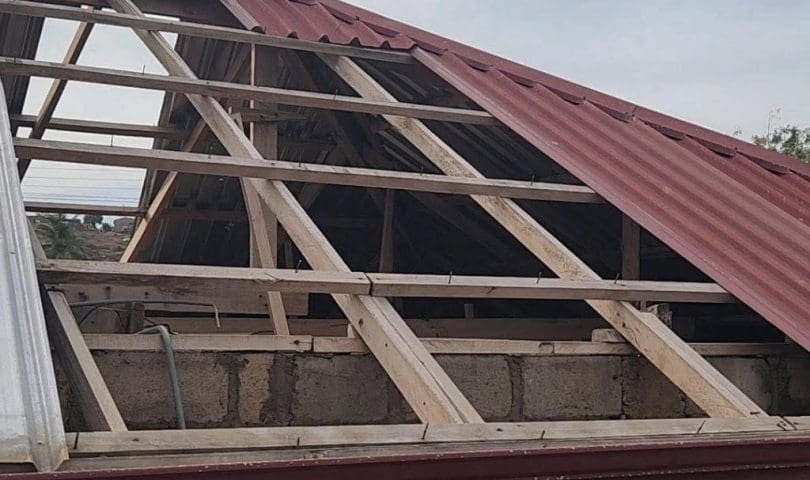
The recent collapse of the GN Savings branch building at Biriwa, sitting helplessly along the Accra–Cape Coast highway, is not an isolated incident. It is a symbol of a national disgrace. A building that once served customers, employed workers, and contributed to local economic life has been reduced to rubble, not by an earthquake, not by a storm, but by deliberate neglect. This is not misfortune. This is mismanagement. This is not an accident. This is administrative violence.
A responsible receiver safeguards assets. A competent receiver preserves value. A professional receiver ensures that what belongs to the public is not wasted. Yet in this case, the Receiver’s stewardship has been nothing short of catastrophic. The law empowers a receiver to protect assets for the benefit of creditors and the state. Instead, what we have witnessed is the opposite: a pattern of abandonment so severe that it borders on wilful financial loss.
And financial loss is not an abstract concept. It is the pensioner whose savings evaporated. It is the worker whose job disappeared. It is the community whose local bank branch now stands as a ghostly ruin. It is the taxpayer who will ultimately bear the cost of rebuilding what was destroyed through negligence.
The human cost is even more painful. These institutions were not just buildings; they were livelihoods. They were the pride of communities. They were the result of decades of Ghanaian entrepreneurship and sacrifice. To watch them rot is to watch the dreams of ordinary people rot with them.
What makes this tragedy even more unforgivable is that it was avoidable. The Receiver could have secured the buildings. He could have auctioned the vehicles. He could have inventoried the equipment. He could have repurposed assets for state use. He could have preserved value. Instead, he presided over decay.
And so the question must be asked plainly:
Who benefits when national assets are allowed to rot?
Certainly not the depositor. Not the taxpayer. Not the state. Not the communities. The only beneficiaries are those who profit from chaos, from weakened institutions, from the erasure of indigenous financial enterprises.
Ghana cannot continue to normalize this level of waste. We cannot continue to shrug as millions of cedis in assets are destroyed through neglect. We cannot continue to accept that public officials can preside over such loss without consequence. Accountability is not optional; it is the foundation of a functioning republic.
The Receiver must be held responsible. The Bank of Ghana must answer. The state must investigate. And the public must demand better.
A nation that allows its assets to rot is a nation that has lost its sense of stewardship. A nation that watches silently as buildings collapse and equipment rusts is a nation that has forgotten that development is built brick by brick, cedi by cedi, decision by decision.
This is not just about GN Savings. It is about the soul of governance. It is about the value we place on public resources. It is about whether we are serious about development or merely pretending.
Ghana deserves better. The people deserve better. And history will not be kind to those who allowed this destruction to happen.