
Sankofaonline News Desk: March 25, 2026
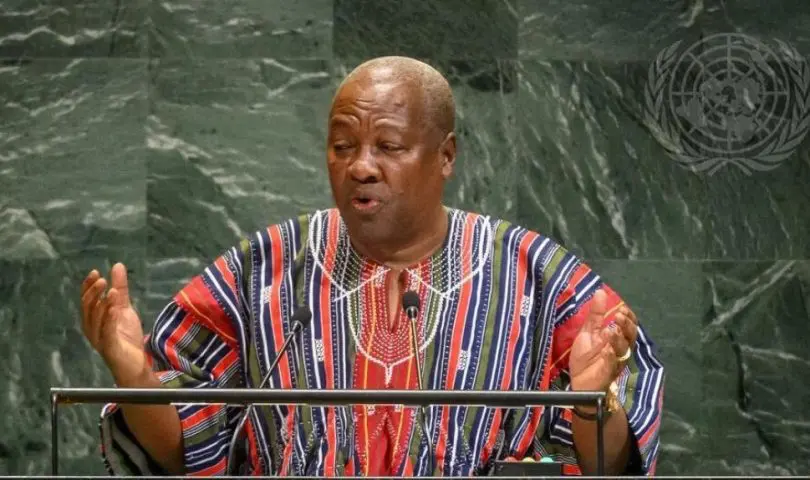
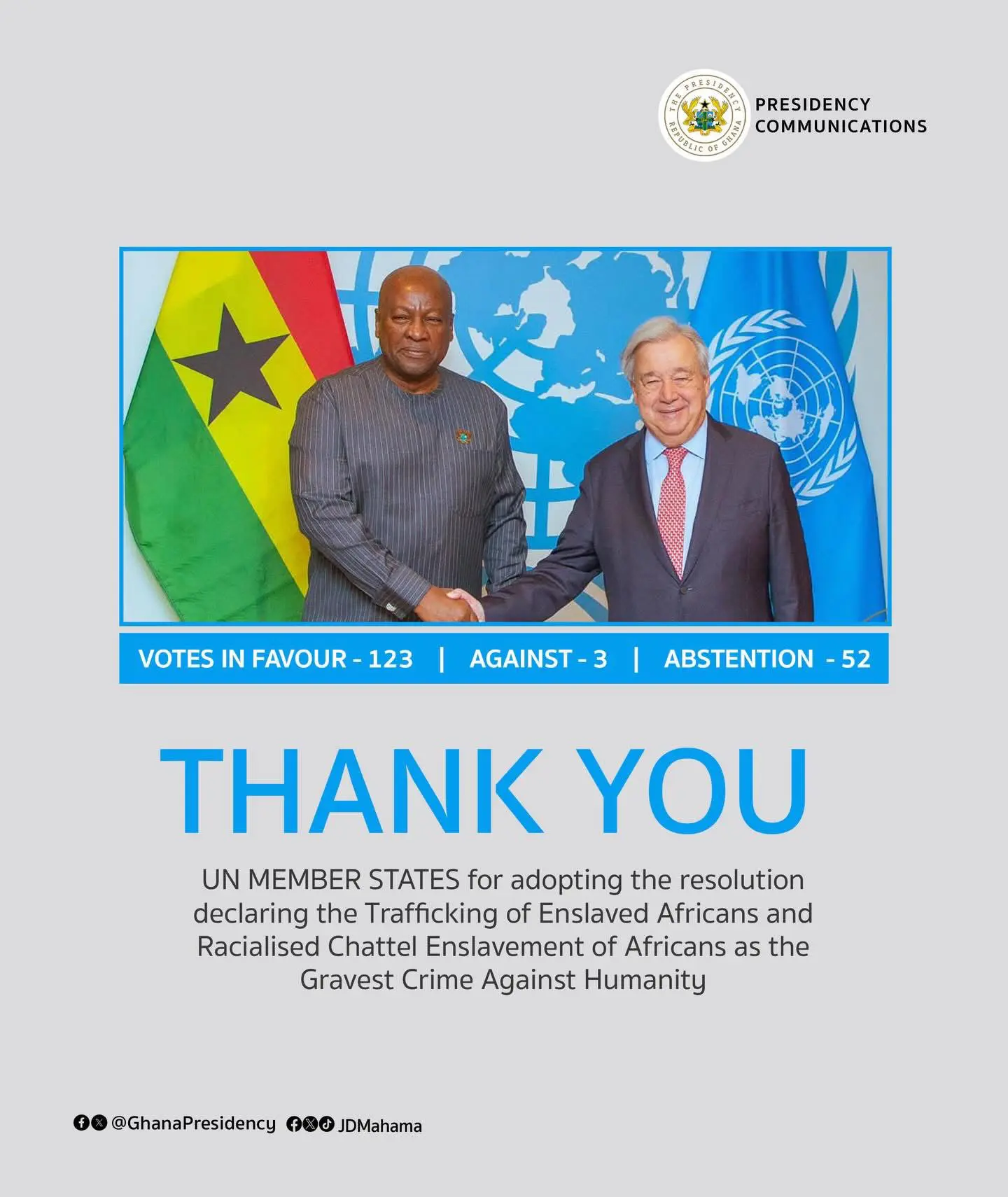
Sankofaonline.com — In a landmark decision that will reshape global conversations on justice and historical accountability, the United Nations has overwhelmingly adopted a motion led by President John Dramani Mahama to formally declare the Transatlantic Slave Trade the greatest crime against humanity.
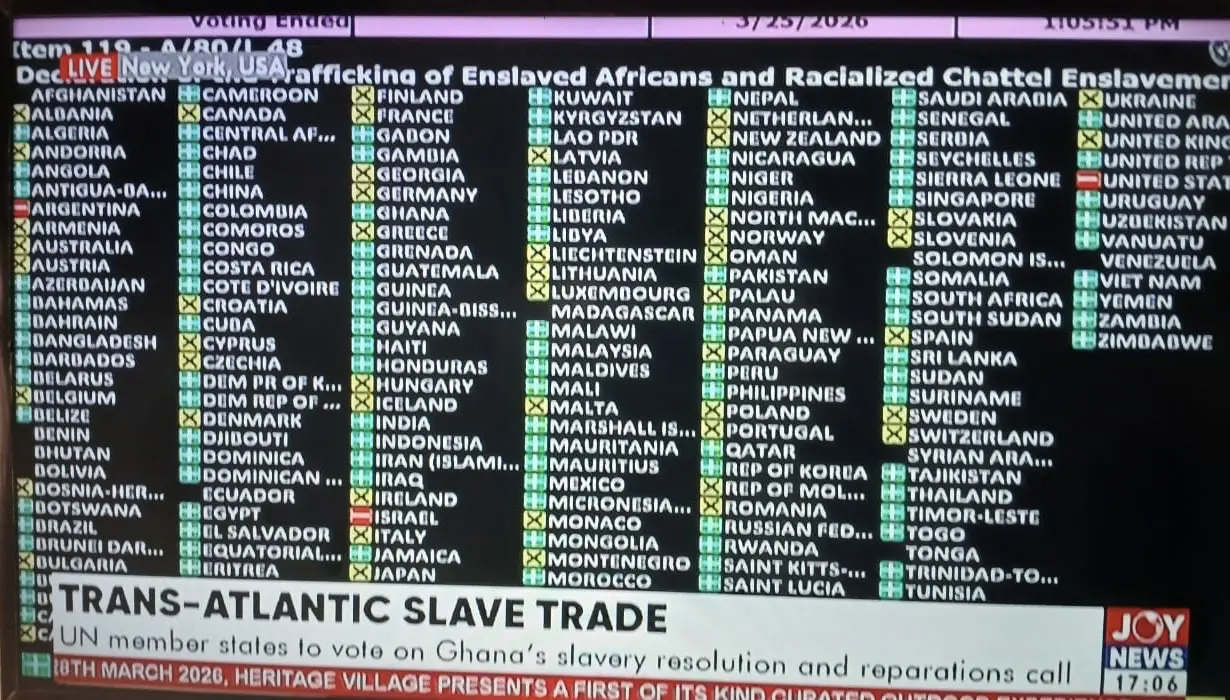
The resolution passed with 123 votes in favor, 3 against, and 52 abstentions, marking one of the most decisive moral victories for Africa and the global African diaspora in modern diplomatic history. Argentina aligned with the United States and Israel to oppose the resolution.
President Mahama’s motion called on the world to confront the brutal legacy of the slave trade not as a distant historical episode, but as a defining atrocity that shaped global power, wealth, and inequality. His argument, grounded in historical truth and moral clarity, resonated across continents.
Diplomats described the atmosphere in the General Assembly chamber as charged and emotional. Delegations from Africa, the Caribbean, and Latin America rose in applause as the results were announced, signaling a shared triumph for nations whose histories bear the scars of enslavement.
For descendants of enslaved Africans worldwide, the vote represents long‑awaited recognition of generational trauma and a renewed global commitment to reparative justice. Scholars have long argued that the Transatlantic Slave Trade — spanning four centuries and involving the forced transport of over 12 million Africans — remains the most devastating crime in human history. Today, the world formally acknowledged that truth.
President Mahama’s leadership throughout the process drew praise for its diplomacy and unifying tone. Rather than framing the motion as punitive, he positioned it as a necessary step toward healing, accountability, and a more honest global future. His message was clear: humanity cannot progress without confronting the truth of its past.
With the motion adopted, the UN is expected to begin work on a global reparations framework, establish a permanent memorial and education fund, and initiate consultations with affected nations and diaspora communities. Mechanisms for economic, cultural, and developmental restitution are also anticipated.
Across Africa and the diaspora, the decision is being hailed as a watershed moment — a victory not only for the continent, but for justice itself.
Today, the world affirmed what Africa has always known: our ancestors deserved justice, our descendants deserve truth, and our continent deserves restitution.