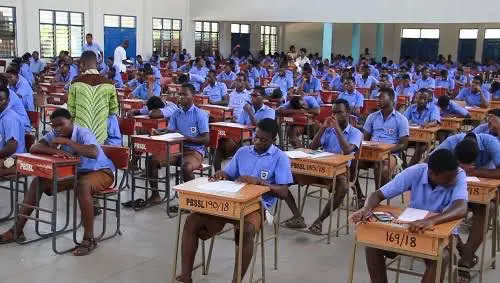

Education stakeholders and policymakers have called for a comprehensive overhaul of Ghana’s secondary education system following a national dialogue convened to address the disappointing 2025 West African Senior School Certificate Examination (WASSCE) results.
The forum, organized by the Ghana Reads Initiative in partnership with the Educational Times Newspaper at the Ghana Library Authority in January 2026, brought together civil society groups, education agencies, parents, and students to move the public conversation from alarm to actionable reform.
Participants argued that the recent dip in performance should not be viewed as a final verdict on student intelligence but rather as a systemic “learning alarm” exposing long-standing gaps in foundational literacy, teacher motivation, and school discipline.
During the deliberations, the group identified several critical bottlenecks contributing to the decline, including weak numeracy skills at the basic level, overcrowded classrooms, and the unregulated use of mobile phones and social media among students. Teacher-related constraints, specifically delayed intervention allowances and a lack of continuous professional development, were also cited as primary factors undermining instructional quality.
Furthermore, the dialogue highlighted a troubling rise in examination malpractice and a failure to effectively utilize post-examination data from Chief Examiners’ Reports to implement targeted remedial strategies for underperforming schools. To rectify these trends, the stakeholders proposed a series of priority reforms, including the institutionalization of a national diagnostic review to support students in core subjects like Mathematics and English.
The government was urged to settle outstanding teacher arrears to boost morale, while school authorities were encouraged to enforce stricter behavioral codes and mobile phone restrictions. Additionally, participants recommended a review of rigid certification thresholds to allow for more flexible learner progression.
The Ghana Reads Initiative and its partners concluded the session by reaffirming their commitment to evidence-based advocacy, emphasizing that restoring confidence in the nation’s educational future requires collective accountability and decisive policy direction rather than public lamentation.
Fiifii NETTEY