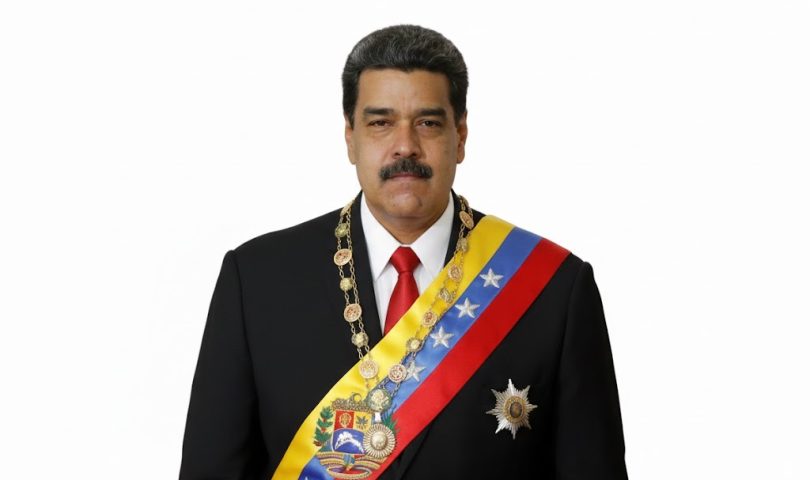

Read about the Authority of the Federal Bureau of Investigation to Override International Law In Extraterritorial Law Enforcement Activities after the article :
By Nii Daniel Okine , Accra
The arrest of Nicolás Maduro by the United States marks one of the most consequential assertions of unilateral criminal jurisdiction over a sitting foreign leader in modern history. Citing the precedent of Manuel Noriega, U.S. authorities have sought to justify the seizure as consistent with domestic law and prior practice. Yet a careful examination of international law reveals that this comparison is deeply flawed. Unlike Noriega, Maduro was a sitting head of state exercising effective control at the time of his arrest. His seizure, undertaken without congressional authorization or an international mandate, constitutes a serious breach of customary international law and a destabilizing departure from established norms governing sovereignty, immunity, and the use of force.
The arrest has fundamentally altered the landscape of international criminal enforcement. For the first time in decades, a major global power has physically seized a sitting foreign head of state outside the framework of international adjudication or collective security authorization. This development raises urgent questions about the limits of unilateral enforcement, the resilience of head-of-state immunity, and the future of the international legal order.
U.S. officials have relied heavily on the 1989 arrest of Manuel Noriega to justify the action against Maduro. However, the Noriega case, properly understood, does not support the legality of this arrest. On the contrary, it underscores the narrow and exceptional circumstances under which sovereign immunity may be displaced—circumstances that were absent in Venezuela at the time of Maduro’s seizure.
The Noriega Precedent Reconsidered
Manuel Noriega’s arrest followed a unique convergence of legal and political conditions that have rarely been replicated. Noriega was never the constitutional president of Panama. Although he exercised de facto power as commander of the Panama Defense Forces, he did not hold the office of head of state. Crucially, the United States expressly refused to recognize him as such, and U.S. courts deferred to that executive determination when rejecting his claim to sovereign immunity.
Noriega was also arrested only after the collapse of his regime. His capture occurred during a full-scale U.S. military intervention that dismantled Panama’s governing structures and installed an alternative government. In legal terms, he was not seized as a sitting sovereign leader, but detained as a defeated actor following regime removal. The Noriega case therefore stands for a narrow proposition: a foreign official who lacks head-of-state status and is captured after regime collapse may be prosecuted in U.S. courts. It does not establish a general license to arrest leaders who remain in office and exercise sovereign authority.
Maduro’s Status at the Time of Arrest
At the time of his arrest, Nicolás Maduro was exercising effective control over Venezuelan territory and state institutions. He functioned as commander-in-chief of the armed forces and acted as head of state and government in both fact and law within Venezuela. While his legitimacy was contested and recognition divided internationally, he was recognized as president by a substantial number of states and retained undisputed internal authority.
Under customary international law, sitting heads of state enjoy immunity ratione personae, which shields them from arrest and criminal jurisdiction while in office. This immunity is not contingent on democratic credentials, moral standing, or external approval. It attaches to the office itself and serves to protect the sovereign equality of states rather than the individual officeholder. Unlike Noriega, Maduro was neither a military subordinate nor a deposed ruler. He was not arrested after regime collapse, but while actively exercising sovereign authority. His seizure therefore represents a direct confrontation with one of the oldest and most stable doctrines of international law.
Indictment Could Not Cure the Illegality of Arrest
Prior to the arrest, the United States had indicted Maduro under domestic statutes with extraterritorial reach. While such indictments may be permissible under U.S. law, they do not negate sovereign immunity under international law. The distinction between indictment and arrest is critical. Indictment is a symbolic or preservative legal act that maintains jurisdiction. Arrest, by contrast, is a coercive act that triggers violations of immunity and sovereignty.
International law draws a firm line between these two acts. No doctrine permits a state to unilaterally arrest a sitting foreign head of state solely on the basis of domestic criminal charges. By physically seizing Maduro, the United States crossed that line.
Constitutional Deficiencies and the Absence of Congressional Authorization
The arrest of Maduro necessarily entailed coercive action within or against the sovereignty of Venezuela. Such action falls squarely within the domain of hostilities or acts equivalent thereto. Yet Congress issued no Authorization for Use of Military Force. No claim of imminent self-defense was advanced, and no authorization was obtained from the United Nations Security Council.
Under U.S. constitutional law, unilateral executive action in this context places presidential authority at its lowest ebb, directly conflicting with Congress’s exclusive power to authorize war and significant foreign hostilities. While the Noriega intervention was itself controversial, it occurred within a Cold War framework of asserted national security emergency. The arrest of Maduro lacks even that contested justification.
Implications for International Law
The implications of Maduro’s arrest extend far beyond Venezuela. First, the action erodes the doctrine of head-of-state immunity, exposing leaders worldwide to reciprocal enforcement measures. No state, including the United States, can reasonably expect its officials to remain insulated if such precedents are normalized.
Second, the arrest weakens the prohibition on the use of force under the United Nations Charter by recharacterizing coercive interstate action as criminal law enforcement. Third, it fragments international criminal accountability by shifting enforcement from multilateral institutions toward unilateral action by powerful states. If normalized, this practice would collapse the distinction between law and power, replacing legal order with discretionary enforcement.
Conclusion
The arrest of Nicolás Maduro cannot be justified by reference to United States v. Noriega. Noriega was not a sitting head of state and was captured after regime collapse. Maduro, by contrast, was seized while exercising sovereign authority and enjoying immunity under customary international law. This arrest represents not the evolution of international justice, but a rupture with it. By extending the Noriega precedent beyond its factual and legal limits, the United States has set a course that destabilizes sovereignty, weakens immunity, and invites reciprocal violations by other states.
The Noriega case was an exception. Treating it as a rule risks transforming international law from a system of norms into a contest of power.
Author’s Note:
This article addresses the legal consequences of state action and does not endorse the conduct of any individual or government.
Read about the Authority of the Federal Bureau of Investigation to Override International Law In Extraterritorial Law Enforcement Activities below: