

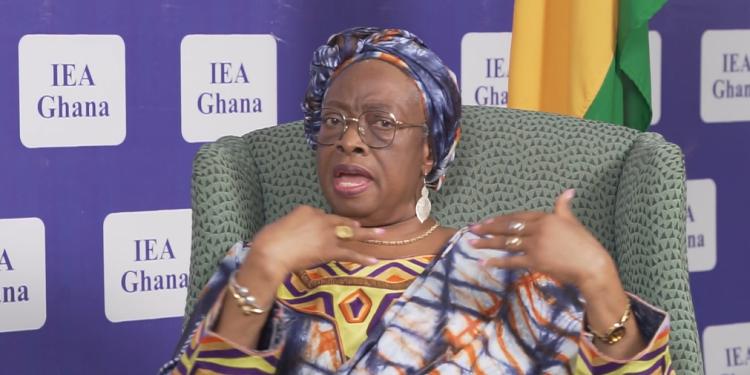

Accra, Ghana – Former Chief Justice Sophia Akuffo has called for a comprehensive review of both Ghana’s 1992 Constitution and the structure of the country’s judiciary, citing the need for greater transparency, reduced political interference, and updated legal frameworks.
Speaking on Channel One TV’s The Point of View with Bernard Avle on Wednesday, November 5, Justice Akuffo commended the Constitution for providing stability but stressed that it now requires modernization.
Regarding the national charter, Justice Akuffo praised its role in establishing the current democratic era, stating, “The Fourth Republic or the Constitution of the Republic has, to a very large extent, served us well. It helped us to stabilise our independence, so to speak. Therefore, the Constitution is a document that I have a lot of respect for.” However, she insisted that “There is nothing in human creation that is sacrosanct or intended to remain the same forever. Things must evolve,” arguing that after decades of operation, improvements are necessary.
She clarified that this should be a review, not a complete overhaul: “Having lived under the Constitution for this long, there are still improvements to be made — not a complete rewriting, but a review.” She suggested that some provisions need “tweaking here and there,” while others require revision or new elements to address modern governance challenges.
Justice Akuffo extended her reformist views to the judiciary, calling for a complete re-examination of its structure, including the processes for judicial appointments and removal, to ensure greater transparency and accountability. She expressed her long-held, passionate concern over the current system, saying, “I have a passionate view and I have had it for quite a long time about how the judiciary is appointed, because the manner in which the appointment is made leaves a lot to be desired.”
She argued that the lack of transparency fuels public speculation and suspicion: “There is not much transparency in the process, and it’s important for that to happen, because otherwise, it leads to all kinds of speculation — that someone got appointed because of this or that — since people may not know the reality of the qualifications and merits of the appointment.” She advocated for models where independent, non-political bodies oversee these appointments.
Finally, the former Chief Justice addressed the excessive workload of the Supreme Court. She cautioned against arbitrarily limiting the number of Supreme Court judges without first reforming the court’s wide jurisdiction, noting that Ghana’s apex court is overburdened because its system allows “come one, come all.” She asked rhetorically, “You can only begin to talk about limiting the number of Supreme Court justices if you also look at the scope and magnitude of the jurisdiction of the Supreme Court. For as long as everyone has a right of access, and cases of all kinds keep coming, how can you limit the number of judges?”
Justice Akuffo concluded that strengthening judicial independence through transparent appointments and practical reforms is essential to maintaining public trust and the integrity of Ghana’s justice system.
Ruth Abla ADJORLOLO
