
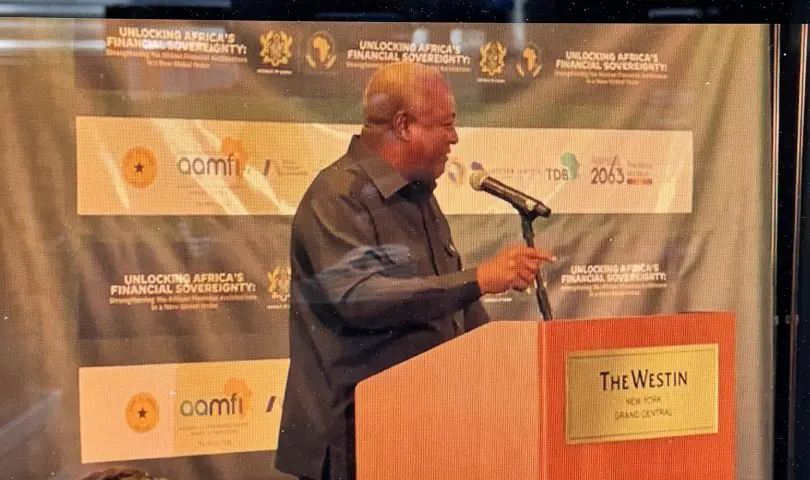

Source: sankofaonline.com
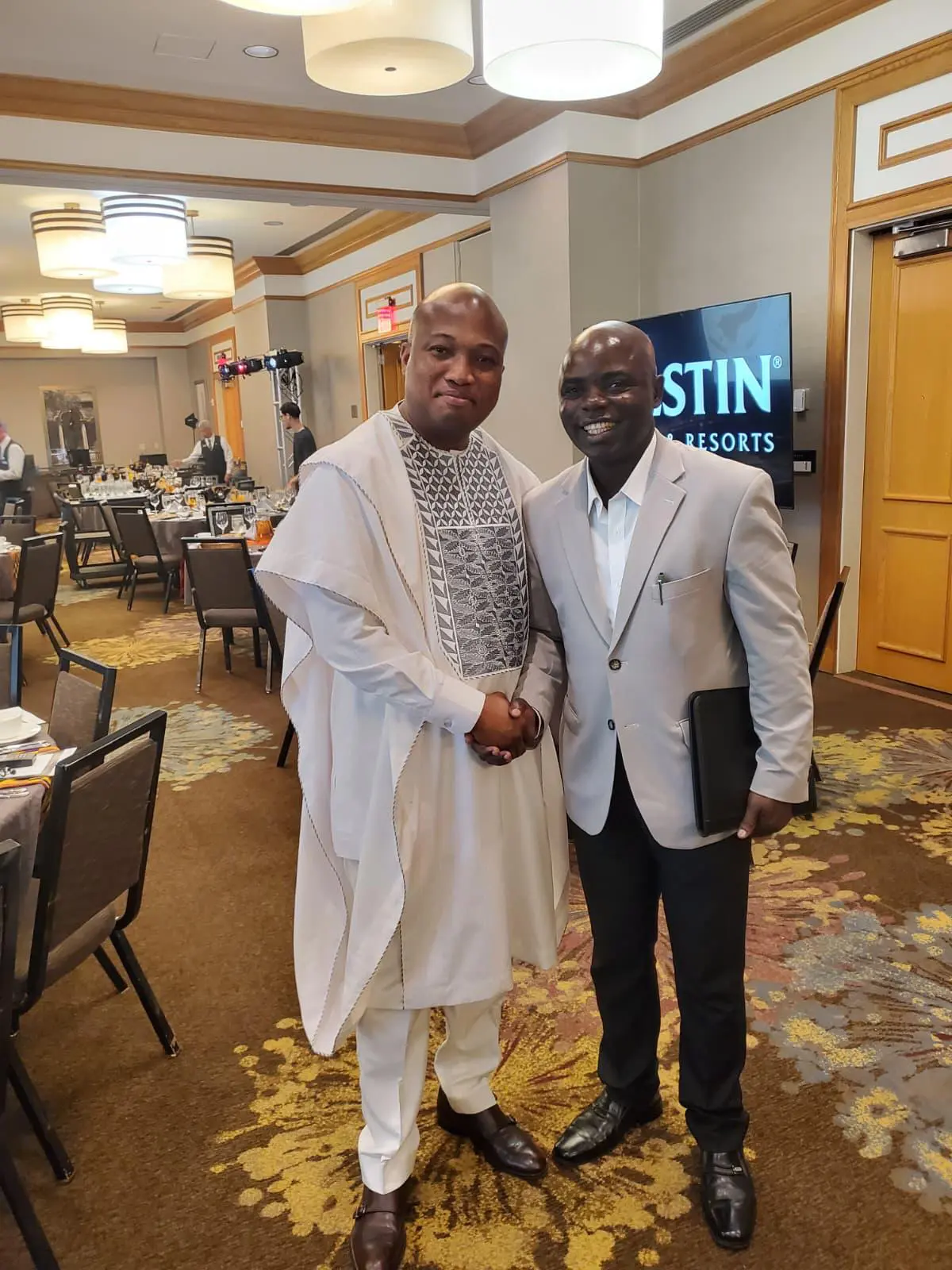
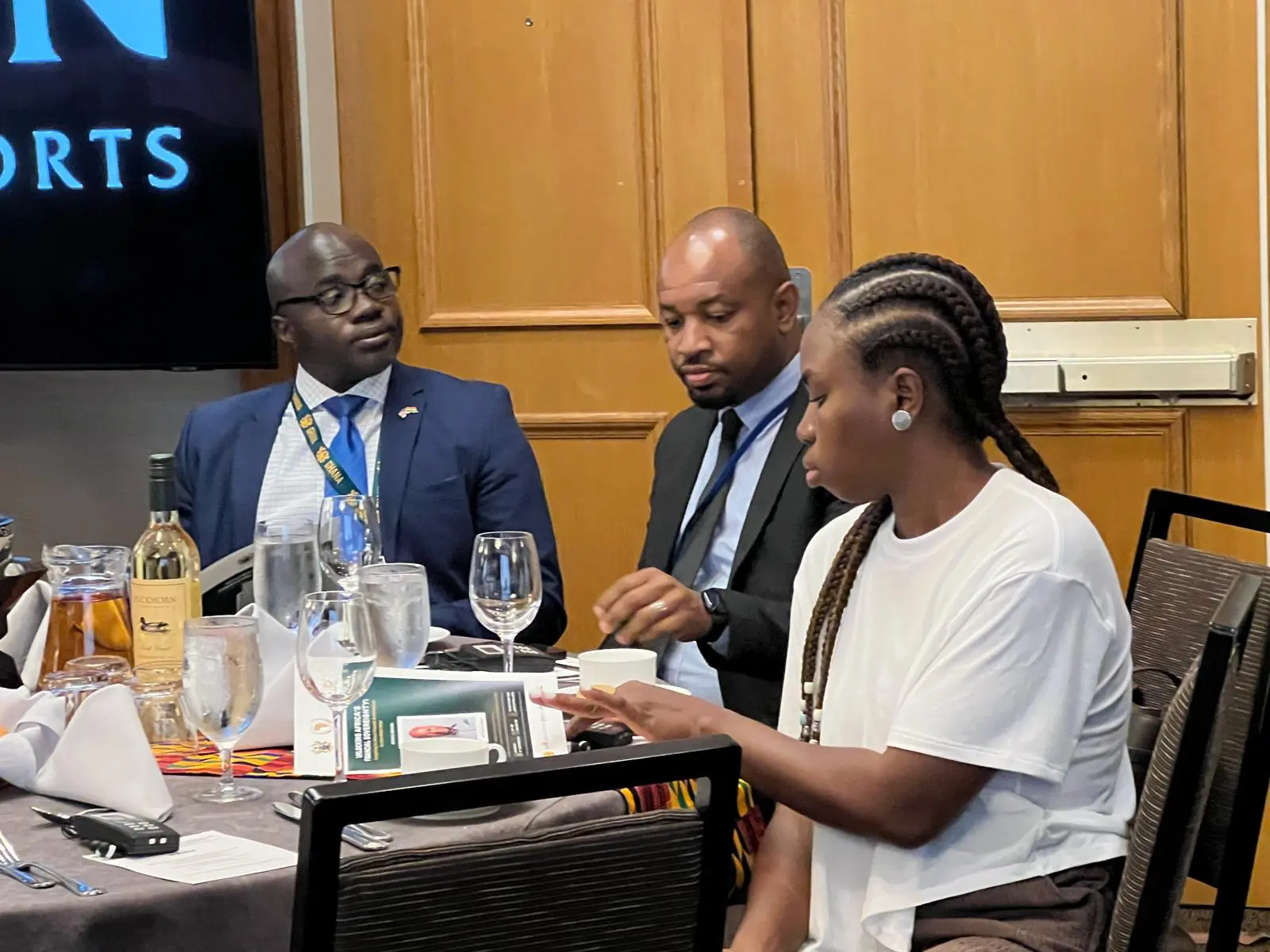
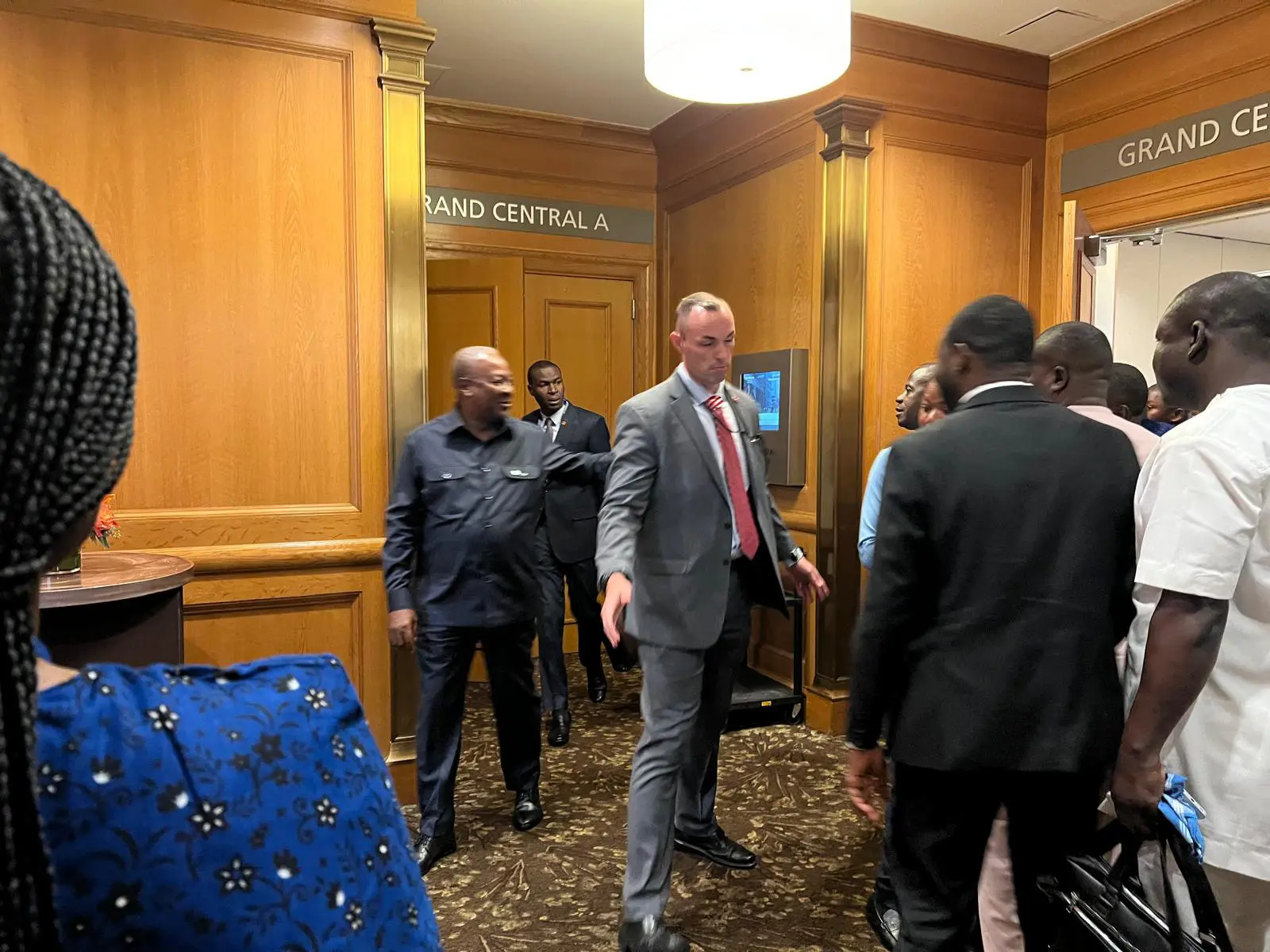
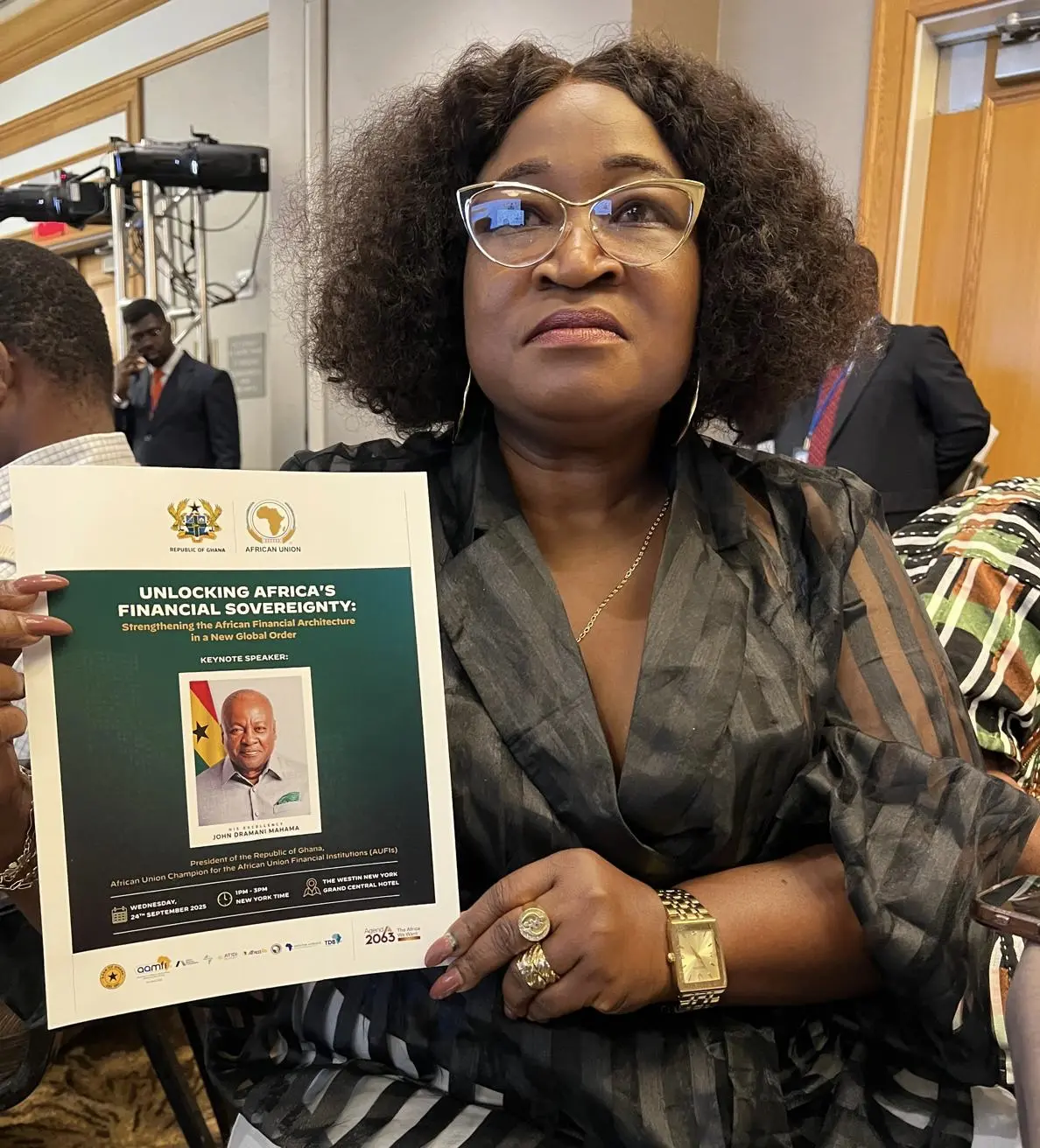
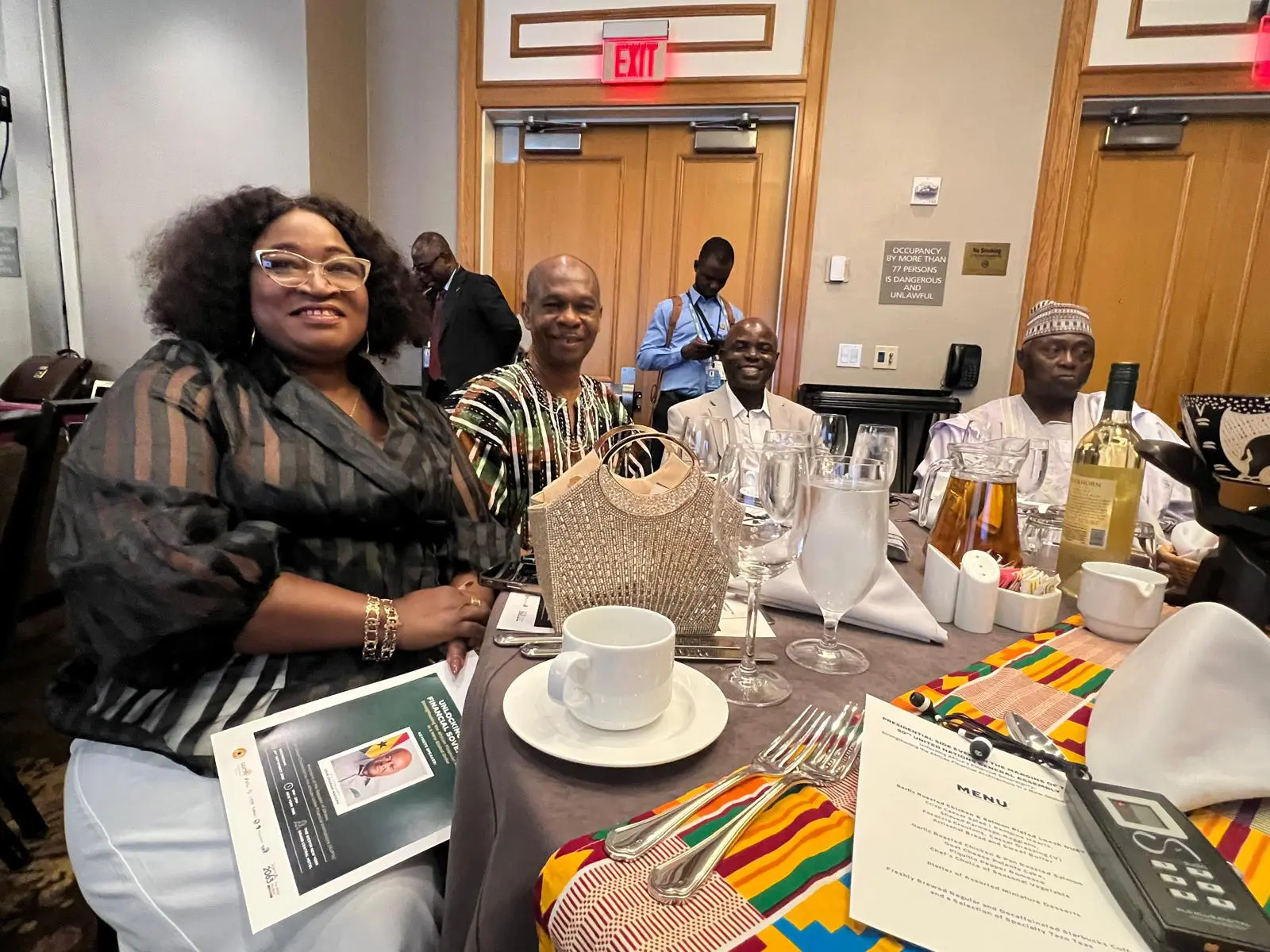
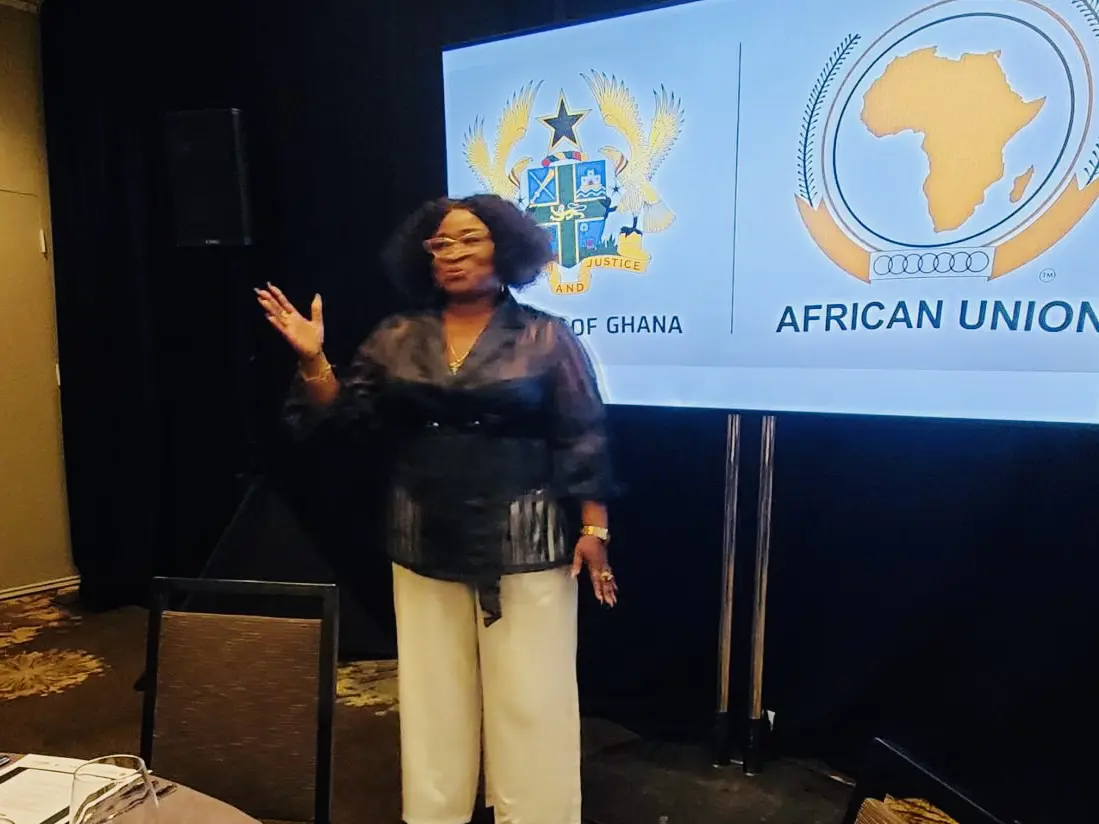
In a resonant declaration that stirred minds and hearts at The Westin Hotel Ballroom in Washington DC, President John Dramani Mahama of Ghana issued a bold challenge to the continent: Seize control of Africa’s financial destiny. With a voice both measured and impassioned, he laid bare the stark realities confronting the continent. Africa faces a staggering $2.5 trillion climate finance shortfall by 2030. Debt-service costs have ballooned from $17 billion in 2010 to $74 billion in 2024, now consuming 11 percent of total revenue. Meanwhile, Africa attracts a mere 3 percent of global foreign direct investment growth and just 2 percent of clean energy finance. These figures, he warned, risk consigning African nations to the margins of a global economy built without them.
Mahama traced the blueprint for change back to the Abuja Treaty of 1991 and Article 19 of the AU Constitutive Act of 2000,foundational pillars mandating the creation of an African Central Bank, African Investment Bank, African Monetary Fund, Pan-African Stock Exchange, and African Finance Corporation. Agenda 2063, he reminded the audience, enshrines these institutions as flagship drivers of integration,a vision still waiting to be realized. “Now,” he declared, “is the time to breathe life into those founding accords.”
At the heart of his address were two transformative proposals. First, the formation of an AU Financial Institutions Task Force,comprising finance ministers, central bank governors, and AU commissioners, to expedite ratification, financing, and institutional setup of each pan-African body.
Second, a Ghana-led Continental Communications Strategy to demystify these institutions for media, academia, and civil society, transforming abstract treaties into tangible hope. By untangling technical jargon and engaging every citizen, Mahama argued, the continent will forge the political will needed to realize financial autonomy.
He laid bare the structural hurdles: an annual infrastructure and loan gap of $181–221 billion, a climate finance deficit of $213 billion through 2030, and credit-rating agencies that consistently undervalue African economies. Tax-to-GDP ratios hover at 16 percent,far below Asia’s 27 percent and the OECD’s 34 percent. Raising the tax burden by just five percentage points, he noted, could unlock billions more for schools, hospitals, and roads. And with $500 billion of African foreign reserves parked in Western banks, Mahama called for a strategic redirection of those resources into homegrown institutions capable of weathering global shocks.
He portrayed robust African financial institutions as linchpins of prosperity—fueling regional trade corridors, underwriting infrastructure projects, shoring up health systems in times of crisis, and insulating the continent from economic turbulence. A stronger multilateral framework, he insisted, will not only curb external vulnerabilities but also attract global partners,from the IMF and World Bank to the BRICS New Development Bank, to collaborate on fairer terms.
As his speech drew to a close, Mahama’s appeal merged moral clarity with technical urgency. Africa’s story, he said, is woven from threads of resilience and aspiration. By ratifying its treaties, mobilizing resources at home, and communicating its vision with unity and purpose, the continent can reclaim its narrative,and its wealth. Ghana stands at the vanguard of this campaign, ready to lead the charge toward financial sovereignty and a future defined not by dependency, but by collective African achievement.
Key Reforms Proposed
- Formation of an AU Financial Institutions Task Force to expedite ratification, financing, and establishment of the African Central Bank, African Investment Bank, African Monetary Fund, Pan-African Stock Exchange, and African Finance Corporation.
- Ghana-led Continental Communications Strategy to demystify AU financial institutions and engage media, academia, and civil society in building political will.
- Redirect a portion of Africa’s $500 billion foreign reserves from Western banks into African financial institutions to strengthen homegrown capital bases.
- Raise the continent’s tax-to-GDP ratio by at least five percentage points to generate additional revenue for infrastructure, health, and education.
- Advocate global financial‐architecture reforms, including fairer credit-rating methodologies to lower borrowing costs and attract private investment.
- Mobilize domestic climate finance to close the $2.5 trillion green investment gap through 2030, prioritizing adaptation and clean-energy projects.
- Enhance collaboration with international partners (IMF, World Bank, African Development Bank, BRICS New Development Bank) on equitable terms that reinforce Africa’s economic sovereignty.
Video & Pictures: Credit Mr. Steve Dei