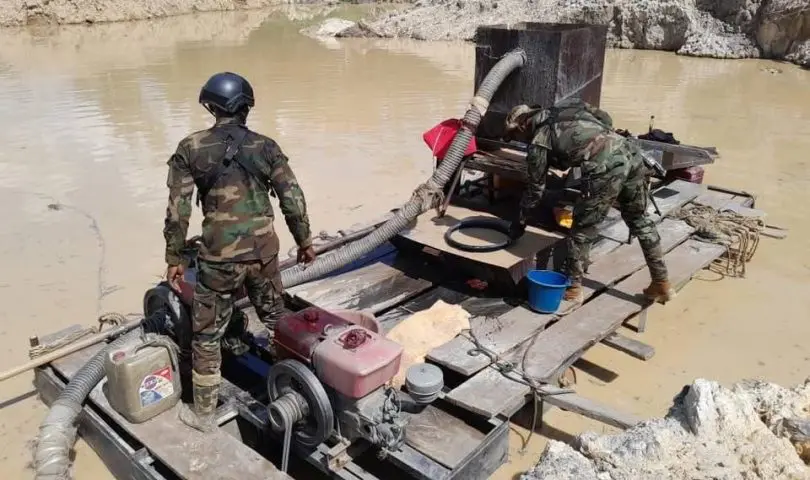

Civil society, religious organizations, and the media have intensified calls for the government to declare a state of emergency to confront illegal small‑scale mining, arguing that galamsey now meets the constitutional thresholds that permit extraordinary measures to protect life, water, and livelihoods. The Catholic Bishops, farmer groups, and advocacy coalitions have framed the crisis as not only environmental but moral and security‑threatening, urging an immediate, territorially targeted emergency declaration to secure devastated lands, dismantle criminal syndicates, and stop pollution of water bodies. Pressure from these quarters has been amplified by repeated reports and commentary that link widespread contamination of rivers and the diversion of community resources to the collapse of local food systems, and by explicit demands that the Presidency move beyond conventional law enforcement to emergency powers.
The Presidency has signalled that a suite of non‑emergency interventions is under implementation and development, including a new permit regime and tracking for heavy machinery, tighter controls on excavator imports, prohibitions on toxic processing chemicals, mandatory site rehabilitation clauses, and strengthened community development agreements and ESG requirements for operators. That public list of measures explains, at least rhetorically, why the executive has been reluctant to resort to Article 31 emergency powers: the administration contends it still has conventional legal, regulatory, and administrative tools to deploy and prefers to exhaust those before invoking extraordinary powers that suspend normal checks and civil liberties.
A state of emergency would enable rapid, concentrated action where the crisis is most acute: immediate redeployment of security resources, temporary suspension of processes that slow enforcement, expedited seizures of equipment, and the authority to impose curfews or movement restrictions in high‑risk zones. Advocates argue this surge capacity is necessary because incremental enforcement has repeatedly been outpaced by criminal networks, complicity among local actors, and the rapid environmental costs already incurred. Beyond enforcement, an emergency declaration can serve symbolic and signalling functions: it elevates galamsey from a policy problem to a national crisis, justifies exceptional resource allocation, and creates political space to confront entrenched patronage networks implicated in the trade.
Emergency powers are blunt instruments that risk infringing civil liberties, concentrating authority in the executive, and weakening oversight mechanisms that deter abuse. Short‑term security gains can be undermined if emergency measures are used selectively, if prosecutions are not sustained in civilian courts afterwards, or if they entrench militarized responses that alienate communities dependent on informal mining incomes. Politically, declaring an emergency invites scrutiny of the state’s readiness to manage exceptions responsibly. The same executive who campaigned on a ban may face accusations of overreach, partisanship, or incompetence if emergency powers produce collateral harms, fail to dismantle syndicates, or are perceived as a substitute for lasting legal and economic reforms.
A pragmatic pathway is to use narrowly tailored emergency measures as a time‑bound tool to secure hotspots while simultaneously fast‑tracking durable reforms: revoke corrupt or non‑compliant licences, strengthen regulatory oversight, pass clarifying legislative instruments, and cultivate viable alternative livelihoods for affected communities. The Presidency’s measures on equipment permits and rehabilitation create a legal and administrative foundation; a temporary emergency could create the operational breathing room to enforce those rules and complete a forensic audit of suspect licences.
Any emergency deployment should be matched with transparent KPIs, civilian judicial oversight of prosecutions, and a post‑emergency transition plan that embeds environmental restoration, community compensation, and economic alternatives into a durable governance architecture to prevent relapse.
The debate over whether to declare a state of emergency for galamsey is not a binary choice between action and inaction but a judgment about sequencing, institutional capacity, and political risk. Civil society’s urgency reflects real ecological and human costs that demand exceptional responses. The executive’s hesitancy reflects legitimate concerns about rights, abuse of power, and the durability of security gains. A defensible middle way uses limited emergency powers to buy time and enforcement leverage while committing publicly and legally to the reforms that can make the temporary measures permanent and equitable.
Credit- IMANI’s Criticality Analysis of Governance and Economic Issues September 15–20, 2025