

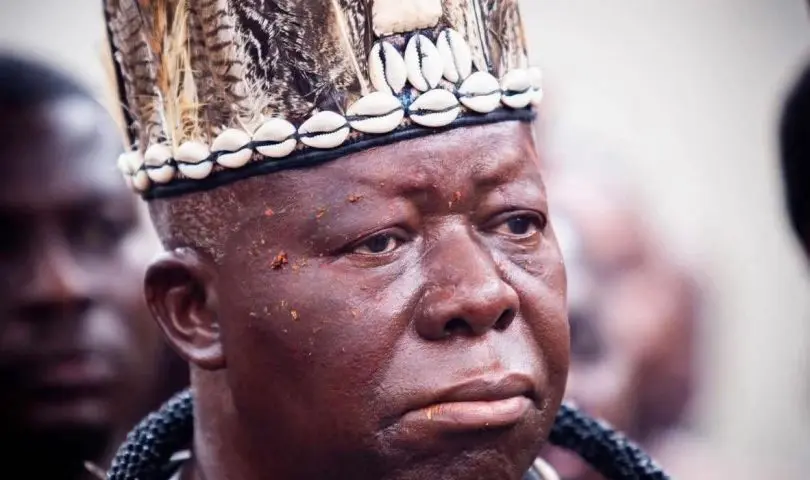

KUMASI — In a powerful display of resolve, Otumfuo Osei Tutu II, the Asantehene, appeared at the final burial rites for his last sister not in quiet mourning, but as a hunter on the trail of his prey. His attire, meticulously chosen for the occasion, was a clear declaration of authority and might, even in sorrow.
The King was robed in Kuntunkuni, the traditional black mourning cloth, but this was no ordinary garment. It was adorned with cowries, ancient symbols of wealth and continuity, and porcupine quills, the enduring emblem of Asante strength and defiance. The cloth, named Tumi (Power), made a clear statement: his grief was a provocation, and he would confront it with unwavering power.
Perched on his head was the Okyerefo, a hat that bore the feathers and beak of the falcon and eagle—birds known in Asante symbolism for their sharp vision, swiftness, and unyielding dominance. Wearing this crown was a proclamation of readiness to avenge and rise above the enemy, death itself.
His bearing echoed the renowned warriors of Amansie Prammire, who only moved when provoked. As the Queen makes her final journey, the King stands as a hunter, his regalia and silence announcing a single truth: the wounded Lion King has set his aim on Death.
Ruth Abla ADJORLOLO