

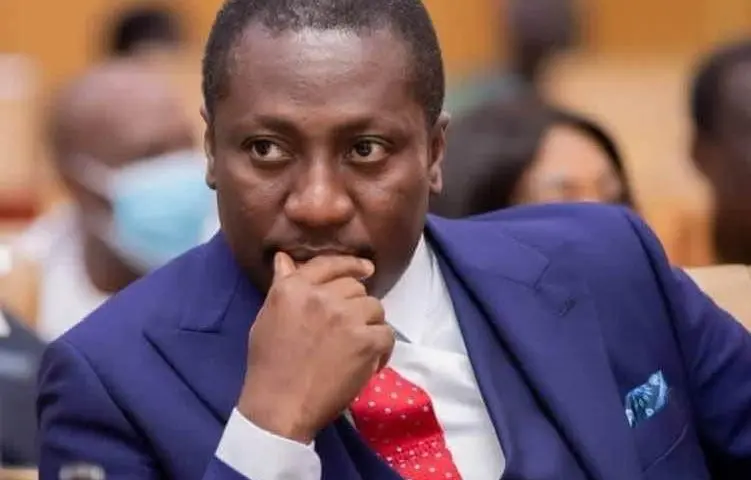

In a moment of rare candor and constitutional clarity, Minority Leader Alexander Afenyo-Markin stood today, not as a partisan combatant, but as a statesman in search of a better Ghana. Addressing the leadership of Parliament, members of the diplomatic corps, and the press, his remarks were not a defense of party, but a plea for principle and moderation .
He began with a reflection that few politicians dare to voice: that both major parties have had their turn at the helm over the past three decades, and both have committed excesses. It was not an admission of guilt alone, it was a call to maturity. Afenyo-Markin identified himself as a moderate, and urged his colleagues to abandon the politics of vengeance, the “you do me, I do you” cycle that has corroded public trust and stifled national progress.
His message was clear: Ghana cannot afford to be governed by hardliners. The time has come to embrace moderation, not as weakness, but as wisdom. In a country where political temperature often runs hotter than policy substance. Moderation he noted should not be a tone but strategy for survival.
Minority Leader did not speak in abstractions. He turned to justice, its application, its perception, and its failures. He cited the recent handcuffing and detention of a regional party chairperson, describing it as excessive and emblematic of a justice system that too often confuses force with fairness. He expressed deep dissatisfaction with recent removal of Chief Justice Torkornoo, which many perceive as politically motivated. These are not isolated incidents, he warned. They are symptoms of a deeper malaise.
Afenyo-Markin called for a humane approach to law enforcement,one that respects dignity even in the pursuit of accountability.
Investigations, he argued, should begin with a summons, not a spectacle. Bail conditions should be set with reason, not retribution. The rule of law must be more than a slogan. It must be a shield for the vulnerable and a standard for the powerful.
He urged the Mahama government to take these concerns seriously, to investigate judicial removals with transparency, and to restore democratic accountability to the heart of governance. His appeal was to the conscience of the nation.
In a political landscape often defined by noise, Afenyo-Markin’s voice today was measured, deliberate, and deeply human. He did not offer easy answers. He offered a challenge, to govern with restraint, to prosecute with compassion, and to lead with the humility that comes from knowing power is temporary, but principle is enduring.
If Ghana is to rise above the cycles of retaliation and suspicion, it will need more than reform. It will need leaders who speak as Afenyo-Markin did today, with courage, clarity, and a commitment to the kind of politics that heals rather than harms.
The question now is whether the rest of the political class will listen.
