


By Sankofaonline Editorial Desk
In a bold and sweeping affirmation of its commitment to equitable, quality education, the Ministry of Education has unveiled a transformative portfolio of policies and investments that signal not just reform,but a renaissance. With over GH¢6 billion in strategic allocations and a recalibrated vision for inclusive learning, Ghana’s education sector is undergoing its most comprehensive overhaul in decades. This is not merely a budgetary exercise; it is a moral and national imperative to empower every Ghanaian child with the tools of knowledge, dignity, and opportunity.
Below, Sankofaonline breaks down the policies, their implications, and the profound benefits they promise for students, teachers, families, and the future of Ghana.
- Free SHS: A Billion Cedis of Belief
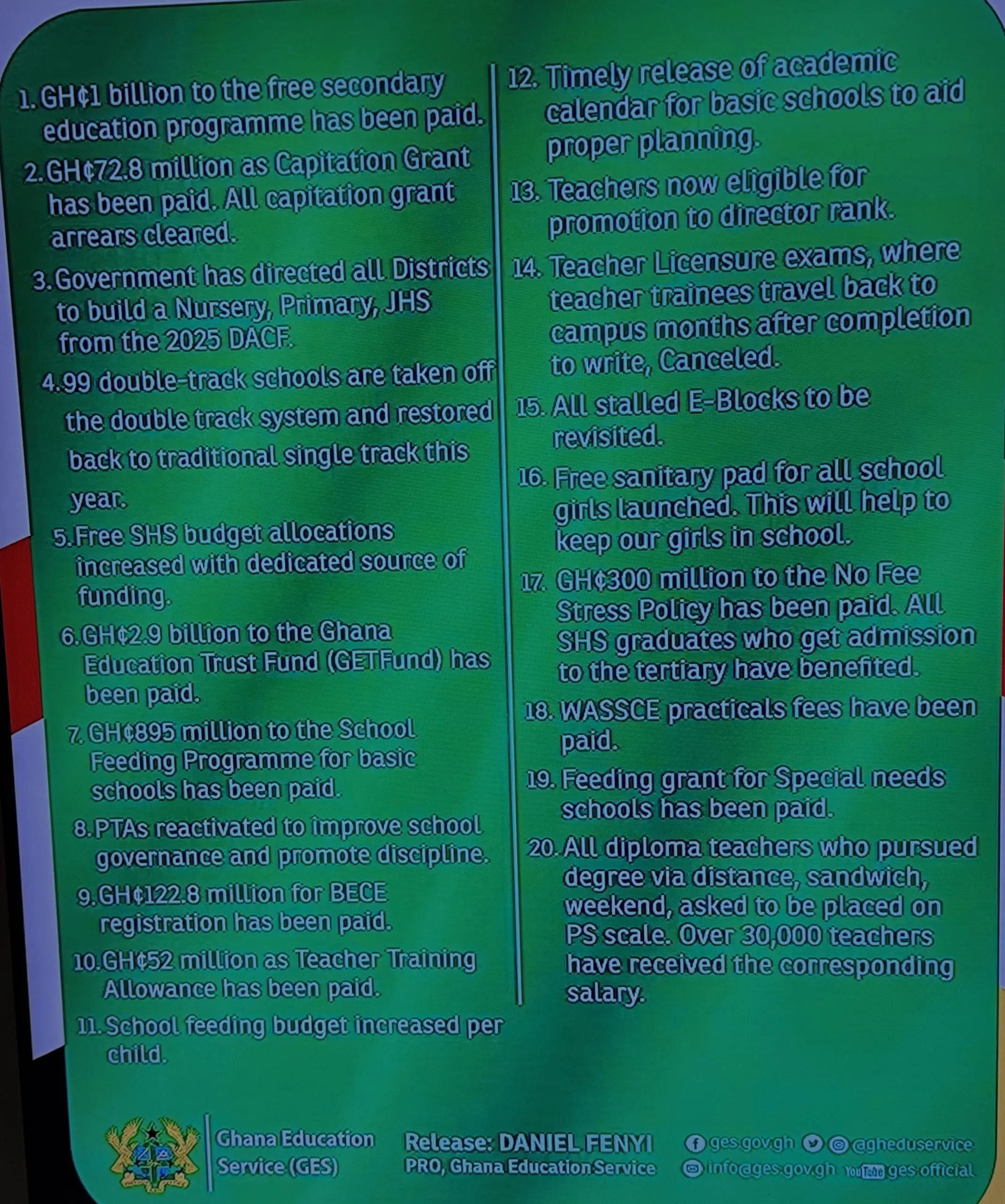
The government’s payment of GH¢1 billion to the Free Secondary Education Programme is more than a fiscal transaction,it is a reaffirmation of the constitutional right to education. With increased budget allocations and a dedicated funding source, Free SHS is no longer a political slogan but a structural pillar. The removal of financial barriers ensures that no child is denied secondary education due to poverty, and the ripple effects,higher literacy, reduced child labor, and improved gender parity,are already being felt nationwide.
- Capitation Grant: Restoring Trust in Basic Education
The full payment of GH¢72.8 million in Capitation Grants, including arrears, revitalizes basic schools by giving them operational autonomy. Schools can now afford essential supplies, minor repairs, and extracurricular activities. This grant empowers headteachers and school management committees to tailor interventions to local needs, improving attendance and learning outcomes.
- Infrastructure Mandate: Building Schools from the Ground Up
In a landmark directive, all districts are now required to construct Nursery, Primary, and Junior High Schools under the 2025 District Assemblies Common Fund (DACE). This policy addresses geographic inequities and ensures that every child, regardless of location, has access to a full continuum of basic education. It also reduces travel time, dropout rates, and the burden on overcrowded urban schools.
- Ending the Double-Track Era
Ninety-nine schools have been removed from the double-track system and restored to traditional single-track operations. This shift improves instructional continuity, reduces stress on students and teachers, and enhances academic performance. It also signals that infrastructure expansion is catching up with enrollment growth,a key milestone in system stabilization.
- GETFund: A GH¢2.9 Billion Investment in Educational Equity
The payment of GH¢2.9 billion to the Ghana Education Trust Fund (GETFund) unlocks stalled projects, including classroom blocks, dormitories, and laboratories. It also supports scholarships, teacher development, and ICT integration. GETFund’s revitalization is a strategic move to bridge urban-rural disparities and modernize learning environments.
- School Feeding Programme: Nourishing Minds and Bodies
With GH¢895 million paid and per-child feeding budgets increased, the School Feeding Programme is now a cornerstone of basic education. It improves nutrition, boosts enrollment, and enhances concentration. For many children, this meal is the only reliable source of daily nutrition,making it a lifeline as much as a learning aid.
- PTA Reactivation: Governance from the Ground Up
Parent-Teacher Associations (PTAs) have been reactivated to strengthen school governance and discipline. This move fosters community ownership, accountability, and cultural relevance in school management. PTAs also serve as watchdogs and advocates, ensuring that policies translate into real improvements.
- BECE Registration: Removing Hidden Barriers
The payment of GH¢122.8 million for Basic Education Certificate Examination (BECE) registration eliminates a major financial hurdle for families. It ensures that every eligible student can sit for the exam, regardless of economic status, and promotes meritocracy in educational advancement.
- Teacher Empowerment: From Allowances to Promotions
Teachers are the backbone of the system, and the Ministry has responded with a suite of reforms:
- GH¢52 million in training allowances paid
- Promotion eligibility expanded to include director rank
- Licensure exams canceled for post-completion candidates
- Over 30,000 diploma teachers upgraded to the Professional Salary (PS) scale
These measures restore dignity, reduce attrition, and attract talent to the profession.
- Academic Calendar Reform: Planning with Precision
The timely release of the academic calendar for basic schools allows for better planning by teachers, parents, and administrators. It reduces confusion, improves attendance, and aligns national assessments with instructional timelines.
- Sanitary Pad Initiative: Keeping Girls in School
The launch of free sanitary pad distribution for schoolgirls is a game-changer. It tackles menstrual poverty, reduces absenteeism, and promotes gender equity. This policy affirms that no girl should miss school because of biology or stigma.
- No Fee Stress Policy: Bridging SHS to Tertiary
With GH¢300 million paid to the No Fee Stress Policy, all SHS graduates admitted to tertiary institutions are supported. This seamless transition reduces dropout rates and ensures that talent is not lost at the gates of higher education.
- WASSCE Practical Fees and Special Needs Support
The payment of WASSCE practical fees and feeding grants for special needs schools reflects a commitment to inclusive education. These policies ensure that students with disabilities and those in science tracks are not left behind.
Conclusion: A New Dawn for Ghanaian Education
This constellation of policies is not merely reactive, it is visionary. It reflects a government that sees education not as an expense, but as an investment in national transformation. From infrastructure to inclusion, from teacher welfare to student nutrition, the Ministry of Education is orchestrating a symphony of reforms that could redefine Ghana’s future.
As Sankofa teaches us, we must look back to move forward. These policies honor the struggles of past generations while lighting the path for those yet to come. The challenge now is implementation, monitoring, and sustaining momentum. But for today, let us celebrate a nation that is choosing to educate, elevate, and empower.
Let the classrooms ring with possibility. Let the chalkboards tell stories of hope. Let Ghana rise, one student at a time.
