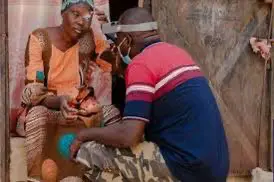

Dakar, Senegal – Senegal has been validated by the World Health Organization (WHO) as having eliminated trachoma as a public health problem, marking a significant victory against the blinding neglected tropical disease. This achievement makes Senegal the ninth country in WHO’s African Region and the 25th globally to reach this milestone.
Dr. Tedros Adhanom Ghebreyesus, WHO Director-General, commended Senegal, stating, “This milestone is yet another sign of the remarkable progress being made against neglected tropical diseases globally, and offers hope to other countries still working to eliminate trachoma.”
Trachoma, a known cause of blindness in Senegal since the early 1900s, was confirmed as a major public health issue through surveys in the 1980s and 1990s. Senegal joined the WHO Alliance for the Global Elimination of Trachoma in 1998 and consistently integrated trachoma control into its national eye health programs.
Dr. Ibrahima Sy, Senegal’s Minister of Health and Social Action, celebrated the achievement, noting, “This new milestone reminds us that our overarching goal remains a Senegal free from neglected tropical diseases.” He highlighted the country’s ongoing progress against other diseases like human African trypanosomiasis and onchocerciasis.
Senegal effectively implemented the WHO-recommended SAFE strategy, which includes surgery for advanced stages of the disease, mass drug administration of antibiotics, public awareness campaigns on facial cleanliness, and improvements in water supply and sanitation. These efforts reached 2.8 million people across 24 districts.
This marks the second neglected tropical disease eliminated by Senegal, following its certification as free from dracunculiasis (Guinea-worm disease) transmission in 2004. The WHO will continue to support Senegal’s health authorities in monitoring communities to prevent any resurgence of the disease.
Dr. Jean-Marie Vianny Yameogo, WHO Representative in Senegal, praised the collaborative effort, stating, “This long-awaited validation is not only a milestone for public health but a powerful tribute to the tireless dedication of frontline health workers, communities, government leaders, and partners who never gave up.”
Globally, trachoma remains a public health problem in 32 countries, primarily affecting the poorest and most rural areas.
The African Region bears 90% of the global trachoma burden, with 93 million people living in at-risk areas as of April 2024. Despite this, significant progress has been made, with the number of people requiring antibiotic treatment in the African Region falling by 51% since 2014.
Ruth Abla ADJORLOLO