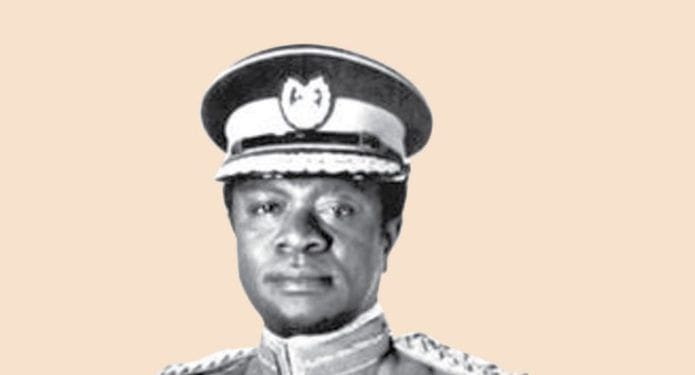

By: Akwasi Yeboah, Accra .
Forty-six years have passed since the fall of General Ignatius Kutu Acheampong, yet his legacy continues to echo across Ghana’s socio-political landscape—a legacy born not of perfection, but of bold vision and a fierce belief in the nation’s capacity to stand on its own feet.
Rising to power in 1972, General Acheampong’s tenure was shaped by a singular, unwavering doctrine: self-reliance. At a time when dependency on foreign aid threatened to erode Ghana’s sovereignty and pride, Acheampong launched a series of homegrown initiatives that dared citizens to believe in the power of their own hands.
Operation Feed Yourself wasn’t just an agricultural policy—it was a mindset shift. Ghana was called to till its soil, seed its fields, and nourish itself with dignity. Operation Feed Our Industries soon followed, targeting local production chains and championing indigenous enterprise. And perhaps most controversially, Acheampong rejected foreign loans deemed tainted by corruption in what became known as the audacious “Yentua” (We Won’t Pay) policy—a defiant stance against economic exploitation.
His administration took decisive control of Ghana’s mineral wealth, ensuring that Ghanaians held a greater stake in their own resources. Under his leadership, the Asutsuare sugar factory was revived, poultry farming flourished, and the dream of true economic independence felt tantalizingly close.
But Ghana’s path is never linear.
Acheampong’s policies, though bold, were not without controversy. His government was accused—rightly or wrongly—of personal improprieties, including claims of favoritism cloaked in scandal. Supporters argue, however, that programs once derided may have been misunderstood efforts to empower women entrepreneurs and spark grassroots economic activity.
In 1978, his time came to an abrupt end through a palace coup led by Lieutenant General Fred Akuffo. Acheampong was court-martialed and, ultimately, executed—a stark punctuation to a chapter filled with promise, flaws, and fierce debate.
What remains indisputable is this: General Acheampong imagined a Ghana that could feed itself, employ its own people, and walk into the future free from the shackles of external dependency. His self-reliance campaign was not just a policy—it was a call to national pride.
In many ways, Ghana’s present-day struggles with foreign debt, food importation, and industrial stagnation reflect the cost of abandoning that vision. A country untouched by war has, paradoxically, endured the silent siege of economic hardship. And one can’t help but wonder: had we stayed the course of self-reliance, what heights might have been reached?
History doesn’t forget those who dreamed beyond their time. And General I.K. Acheampong, for all his complexities, dared to dream of a Ghana that answered to no one but itself.